
A leadership offsite in Northern Norway: planning early 2027

The best leadership offsites share a quality that is hard to create in a hotel conference room: the team is somewhere that makes everyone slightly less guarded. Northern Norway does this almost by default. The cold, the dark and the scale of the landscape put people on equal footing, and a day that ends beside a fire after fresh air and honest conversation usually produces better decisions than a third day in a windowless room.
If you are looking at the first quarter of 2027 for a leadership offsite, the planning window is now. This guide explains how a small senior team can use Arctic Norway for a working retreat, how to balance meetings with experiences, and what a destination management company handles so that the organiser does not have to.
Why plan an offsite in the Arctic
There are practical reasons and human ones. The practical reasons are simple. Tromsø has direct flights from Oslo and several European cities, which makes it reachable for most European teams in a single day, and long-haul participants usually connect through a European hub. A small airport and short distances mean arrival and departure are rarely a burden, and a private transfer can meet the whole group in one vehicle.
The human reasons matter more. Senior teams often arrive at an offsite with a head full of the week they have left behind. A change of landscape resets that. When the first experience is a walk across a snow-covered hillside or an evening around a lavvu fire, laptops stay in bags without anyone having to ask. The conversations that follow tend to be longer and less guarded, and that is where an offsite earns its cost.
Who this suits
We plan this format for small private groups, typically senior teams, founders and partners, rather than large events. Our corporate work covers executive retreats and incentive trips for small groups, and for larger events we work with MICE partners. If your group is above eight guests or the programme is complex, we prepare a custom quotation, as described on our pricing page.
Designing the rhythm: work, move, eat, rest
A good offsite is built around energy, not around a timetable. We usually suggest a four-part rhythm for each day: focused work in the morning, an experience in the afternoon, a long dinner in the evening and an optional late activity such as a northern-lights chase. The order can change, but the principle stays the same. Heavy thinking belongs in the hours when people are fresh, and the Arctic day, particularly in winter, is short. In January, the usable daylight is limited, so we place the experience in the lightest hours and keep meetings indoors in the darker part of the day.
Three days is the minimum for a meaningful retreat once travel is counted, and four or five nights is more comfortable for long-haul participants. We recommend an arrival evening with nothing planned beyond dinner, one full day of strategic work, one day split between work and experience, and a final morning that closes the agenda before departure. Rest matters as much as activity: our guide to rest days in an Arctic itinerary explains why we build slack into every journey.
A sample four-night outline
Day one: arrival, private transfer, a quiet welcome dinner with local ingredients.
Day two: morning strategy session, an afternoon guided snowshoe hike on an easy trail, a long dinner without a presentation in sight.
Day three: morning working session in small groups, a fjord drive in the lightest hours, an optional private northern-lights evening.
Day four: a short decision session, a Sámi culture experience in the afternoon and a farewell dinner.
Day five: departure transfers, staggered to match flights.
Where the work happens
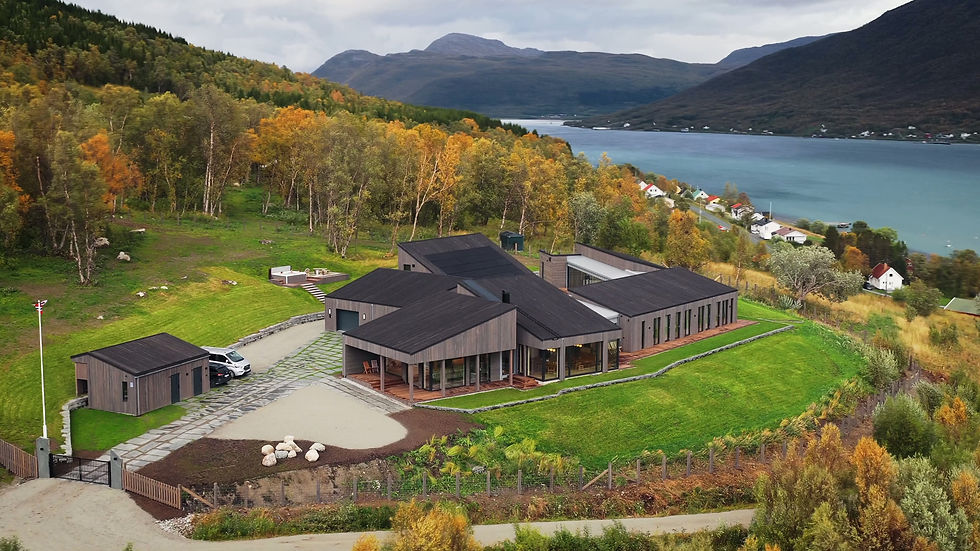
A leadership offsite needs a room that suits the work, and it needs to be private. We arrange accommodation across our network of luxury Arctic lodges, exclusive private apartments and secluded wilderness cabins, and the right choice depends on the group size and the style of meeting. A lodge with a quiet library or a dining room that can be set up as a boardroom is often ideal for a team of six to ten. For smaller groups, a private apartment with a long table and a view over the harbour can be more relaxed than any formal venue.
Practicalities matter: reliable connectivity, a screen or projector if you need one, space to break into smaller groups and a room that can be set up differently each day. We confirm these requirements early and verify them with the venue, rather than assuming. For comfort details of different stay types, see our guide to executive retreats in an Arctic lodge.

Experiences that build trust without feeling forced
Team-building has a reputation for awkward games. The Arctic offers something different: shared experiences that are enjoyable in their own right and that happen to bring people together. The best ones ask for a little effort, produce a shared story and leave room for conversation.
Snowshoe hikes
A guided snowshoe hike is easy, beginner-friendly and quiet. It runs for around four hours, and the pace is gentle enough for everyone. Walking side by side in silence, with the occasional stop to look at the view, often leads to the most candid conversations of the retreat.
Dog sledding and snowmobiles
For groups that want a little adventure, dog sledding or a guided snowmobile evening brings energy and laughter. Both are well established in Northern Norway, and our team can arrange them with experienced operators. Check the activity level of the group first, and keep options open for those who prefer to ride rather than drive.
Sámi culture and reindeer
A Sámi culture experience gives a thoughtful counterpoint to a strategy day. Guests sit by a fire in a lavvu, hear about reindeer herding and traditions and share a meal. It is a slow, human experience that tends to leave groups quieter, in a good way. We encourage respectful visits, and our guide to visiting Sámi culture respectfully sets out how.
A private northern-lights evening
If the dates fall in the aurora season, which runs from September to early April, a private evening chase gives the group a shared moment of wonder. We never promise the lights, so we plan more than one evening and keep the programme flexible. A heated vehicle and a hot drink make the waiting comfortable even when the sky takes its time.
What a destination management company handles
An executive assistant or a founder's office rarely has time to coordinate ten suppliers across a country they do not know. That is the work a DMC takes on. For a leadership offsite we handle professional travel consultancy, reservations and booking management, private transfers in our own premium Mercedes fleet with professional drivers, selected partners for yachts and helicopter transfers, and a personal digital travel dashboard that holds the day-by-day itinerary, bookings, tickets and documents for every participant. Dedicated support is available before and during the trip.
For the person who organises the retreat, this changes the experience. Instead of chasing confirmations, they receive a single plan, a single point of contact and a dashboard they can share with the team. Our offsite checklist for executive assistants goes through what to confirm and when.
How booking works
The process begins with a conversation about dates, group size, objectives and a rough budget. We then design the programme and quote it as one complete experience. A trip-design fee applies, scaled to the length of the programme, and larger groups or complex programmes receive a custom quotation. A 25 per cent deposit is due at confirmation and the balance 45 days before departure. The recommended lead time is six to twelve months for peak periods, though last-minute enquiries are welcome subject to availability.
Timing a first-quarter offsite
January to March is a rewarding window for a working retreat. January still has the polar-night atmosphere, with soft blue light and a sun that returns in the second half of the month. February brings stable winter weather and longer days, and March has strong aurora chances and bright, snowy afternoons. April tends to be quieter. Our planning guide for February and March 2027 explains how quickly the calendar fills and what to secure first.
Because demand for peak winter dates is strong, we advise confirming the dates and the lodge before anything else, then adding transfers, experiences and dining. If your team's diaries are the real constraint, give us two or three possible windows and we will check them against availability.
Frequently asked questions
How many people can a Legendary Arctic offsite include?
We plan for small private groups, with the standard trip-design fee covering up to eight guests. Larger groups or complex programmes receive a custom quotation, and for events beyond that scale we work with MICE partners in Northern Norway.
Is January a good month for a leadership offsite?
Yes, if you are comfortable with short days. January has the polar-night atmosphere and the return of the sun late in the month, and it is within the northern-lights season. Meetings sit comfortably in the darker hours, and experiences are placed in the lightest part of the day.
Can the retreat include a working room with a screen?
Yes. We confirm meeting needs such as space, screens and connectivity with the venue in advance. Tell us how your team likes to work, and we will match a lodge or private apartment to that.
How far ahead should we book?
For peak winter dates we recommend six to twelve months ahead. Shorter notice is possible subject to availability, particularly for small groups and flexible dates, so do get in touch even if your timeline is tight.
Are the northern lights guaranteed on an offsite?
No. They depend on solar activity and clear skies. We plan several evenings and stay flexible so that the group has the best chance, but we describe the aurora as a possibility rather than a promise.
Plan your Arctic journey
If your leadership team is considering an offsite in early 2027, a short conversation about dates, group size and objectives is enough for us to propose a first outline. We reply within one business day with first ideas.


Comments