
Tromsø or Lofoten: Which Base Suits Your Arctic Journey?

Choose Tromsø as your base if you want the northern lights, a lively small city, easy arrivals and a wide choice of experiences within an hour of your door. Choose Lofoten if you want dramatic mountains rising straight out of the sea, red fishing cabins, quiet villages and a slower, more scenic rhythm. For a stay of six nights or more, most couples are happiest with both, and the real question becomes how to divide the time.
This is a comparison from people who plan these journeys for a living. We cover what each place does best, what it asks of you, how the seasons change the answer, and three sample ways to split a week. Nothing here is a ranking. The two places are different in character, and the right choice depends on the kind of days you want.
What Tromsø does best
Tromsø is called the gateway to the Arctic, and it earns the name. It has direct flights from Oslo and several European cities, a compact waterfront with wooden houses, a cathedral, good dining and a surprising amount of culture for a city of its size. It also sits under the aurora oval, which is why it has become one of the most dependable places in the world to look for the northern lights.
The practical advantage is range. From a Tromsø base you can reach fjords, mountains, reindeer herds and open coast in an afternoon. The Sommarøy and Kvaløya fjord route, a guided snowshoe hike, a Sámi experience, dog sledding, whale watching in season and a private northern lights chase are all within easy reach. If you want a varied week without changing hotels, Tromsø is the strongest single base in Northern Norway. Our Tromsø page gives an overview, and our local planner's guide to Tromsø goes into the detail.
The trade-off is that Tromsø is a real city. In winter the evening sky is brightened by city lights, so the best aurora involves a drive. It is also the busiest corner of the region, which is exactly why a private guide and a vehicle of your own change the experience.
What Lofoten does best
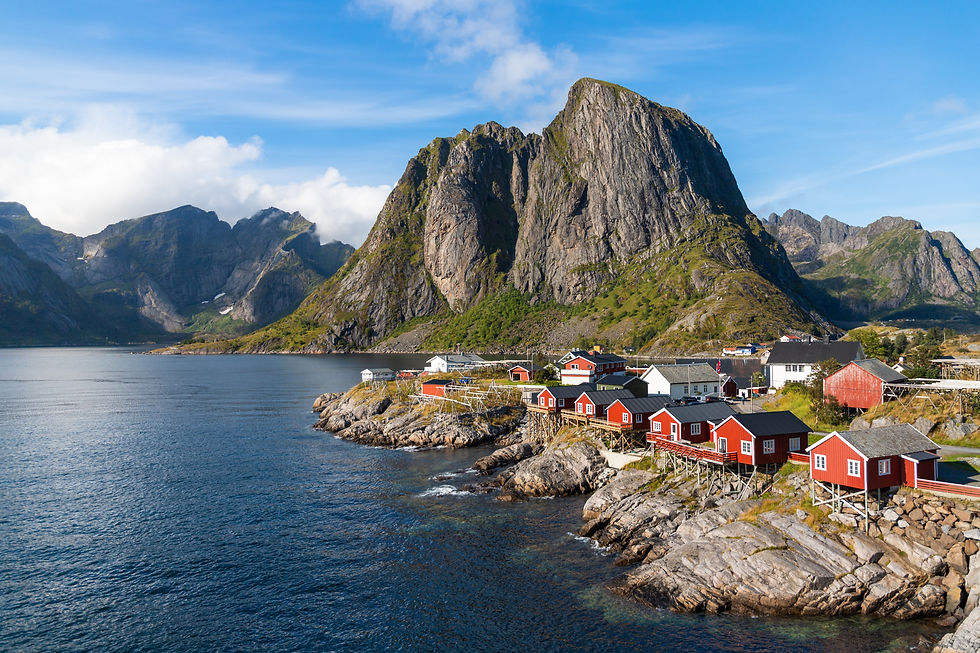
Lofoten is the archipelago people picture when they imagine the Norwegian coast: sharp peaks plunging into the sea, white beaches that look almost tropical in summer, and villages of red cabins on stilts. We describe it as the place where mountains meet the sea, and that is a fair summary. The landscape does most of the work. A drive along the coast road is itself the experience, with a stop every few minutes for a view.
It rewards slow travel. You are not chasing a long list of activities but spending days in a handful of places: a hike above a turquoise beach, a morning in a fishing village, a long dinner with local ingredients, a quiet evening in a comfortable lodge. In winter the aurora can be spectacular above the red cabins, and the skies are often darker than in a city base. In summer the midnight sun gives the islands a soft, endless light.
The trade-off is distance and pace. Lofoten is spread out, roads are slower than they look on a map, and winter weather can change a day's plan. Our guide to Lofoten, tailor-made and the Lofoten destination page explain what a well-built stay looks like.
How the seasons change the answer
Season matters more than most travellers expect, so it is worth deciding on dates before choosing a base.
Winter, September to early April
Tromsø is the more reliable base for a first aurora trip. It offers the widest range of nights and alternatives if the cloud sits over one area, and easy access to guides, vehicles and restaurants. Lofoten in winter is wilder and more atmospheric, with dramatic light on the mountains and the possibility of aurora over the sea, but it asks for more flexibility. Days are short in December and January, and weather can affect travel between islands.
Spring, April and May
Longer days and lingering snow make this a good time for ski touring and photography in both places, with fewer visitors. May is typically one of the quieter months.
Summer, late May to August
The midnight sun runs from around 20 May to 22 July in Tromsø. Lofoten is especially strong in summer, with hiking, beaches, boat days and cycling in light that does not end. Tromsø in summer is lively, green and more relaxed than people expect, with e-bike tours and fjord days. If your priority is scenery rather than the aurora, summer favours Lofoten, though Tromsø is a good partner.
Autumn, September and October
Colour on the hillsides and the first aurora of the season make this a lovely window for both, and one of our favourite times for a combined route.
Three ways to divide a week
The comparison becomes easier when you see actual shapes. These are outlines, adapted to dates, interests and pace when we plan the real journey.
Tromsø-led, 5 to 6 nights. Four nights in Tromsø and one or two in a quieter fjord setting nearby. Best for a first aurora trip, for travellers with limited time, or for anyone who wants variety without much driving.
Balanced, 7 nights. Four nights in Tromsø, three in Lofoten. Enough time in each for the place to settle in, with an internal flight or a scenic transfer between them. Our seven-day route adds Senja as well for guests who want three landscapes.
Lofoten-led, 8 to 10 nights. Two nights in Tromsø to arrive and acclimatise, then a longer stay in Lofoten with one or two bases. Best for slow travel, photography, hiking in summer, or couples who want quiet more than variety. See also our 10-day journey.
If you are tempted to add more places, pause. Every move costs half a day, and a trip with too many hotels feels like logistics. We cover this in our note on a 10-day Arctic Norway journey.

Choose Tromsø if, choose Lofoten if
Choose Tromsø if the northern lights are the main reason for the trip; you have fewer than six nights; you want a mix of activities such as dog sledding, a Sámi experience, whale watching in season and a private fjord day; you like the option of a good dinner every night; or you are travelling in the depth of winter and want the most flexibility.
Choose Lofoten if landscape and photography matter most; you want to travel slowly and stay in one or two places; you prefer a village feel to a city; you are visiting in late spring, summer or early autumn; or you have been to Tromsø already and want something different.
Choose both if you have a week or more and enjoy variety. The combination gives you the city, the aurora, the wildlife and the coast without feeling rushed, provided the transfers are planned carefully. If you want a quieter island with the same drama and fewer visitors, Senja is a strong third option; our Senja page describes it well.
How the getting-there works
Travelling between the two is one of the questions we are asked most often. The honest answer is that there are several ways, and each has its own pace. A flight between the regions is the quickest, a road journey along the coast is the most scenic but takes a long day with stops, and coastal ships offer a slower sea route. We choose based on your dates, the season, the weather and how you like to travel, and we handle the reservations so you do not have to check timetables.
For private guests, the most comfortable approach is usually a private transfer from the airport on arrival, a driver who knows winter roads and, where it fits, a scenic day that turns the transfer itself into part of the journey. Your digital travel dashboard keeps the day-by-day plan, bookings, tickets and documents in one place, so a change in the weather is a conversation with us rather than a scramble. Our overview of the travel dashboard shows what that looks like.
Experiences that fit each base
It helps to think in terms of what you will actually do on a typical day. From Tromsø, a morning might be a guided snowshoe hike, which is easy, beginner-friendly and takes about four hours, followed by a quiet lunch in town and an evening private northern lights chase. Another day could be the Sommarøy and Kvaløya fjord route, five to six hours along the coast with unhurried stops, and another could be reindeer and a Sámi experience in the afternoon light.
From a Lofoten base, days tend to be more landscape-led. A coastal drive between villages, a walk to a viewpoint, a boat trip in good weather, a long lunch built around local ingredients and an evening beside the water. In winter, ski touring is possible in Lofoten as well, with an IFMGA mountain guide on our team, and in summer we also offer a seven-day Arctic Coast e-bike journey.
Neither list is exhaustive. The point is that Tromsø offers more choice per day, while Lofoten offers more beauty per kilometre. The right answer for you depends on whether you want to be busy in a comfortable way or still in a beautiful place. We help you decide by asking what you would be happiest to remember in a year.
Frequently asked questions
Is Tromsø or Lofoten better for the northern lights?
Both lie within the aurora zone and the season runs from September to early April. Tromsø gives the widest range of nights, guides and fallback options, which makes it the more dependable choice for a first trip. Lofoten adds a striking setting. The aurora is never guaranteed in either place.
How many nights do we need to combine Tromsø and Lofoten?
We suggest at least seven nights, with around four in Tromsø and three in Lofoten, so you are not constantly packing. With a shorter trip, we usually recommend choosing one base and doing it well.
Which is better for a honeymoon or anniversary?
Either can be wonderful. Tromsø suits couples who enjoy good dining, a private aurora evening and variety. Lofoten suits those who want seclusion, scenery and a slower pace. Many couples choose a few nights of each.
Is Lofoten worth visiting in winter?
Yes, for the right traveller. It is quiet and atmospheric, with dramatic light and aurora over the sea, but the days are short and the weather can change plans. A flexible itinerary and a driver familiar with winter roads make a real difference.
When is the best time to visit Lofoten?
Late May to August for hiking and the midnight sun, and September to March for the aurora and winter atmosphere. Shoulder months are often quieter. We match the month to what you want from the trip.
Plan your Arctic journey
If you are weighing the two places, tell us your dates, who is travelling and what a good day looks like, and we will suggest a base or a split that suits you. We reply within one business day with first ideas.


Comments