
Ski Touring in Lofoten: How We Plan a Week on the Islands

Ski touring in Lofoten means climbing on skins from near sea level, often within sight of the water, and descending through snow that ends almost at the shoreline. It is one of the few places in the world where a morning on a ridge can be followed by an evening in a warm cabin beside the sea. The season typically runs from late winter into spring, when the days lengthen and the snowpack settles, and it suits skiers with a reasonable level of fitness and touring experience, plus a guide who reads the mountains daily.
If you have ski-toured in the Alps, Lofoten will feel both familiar and strange. The terrain is steep and dramatic, the peaks are not high by Alpine standards, and the sea changes everything: light, weather, the way the snow sits, even the pace of the day. Done well, it is among the most memorable ways to see the islands.
Here is how we think about a ski touring journey in Lofoten, who it suits, and how to fold it into a wider tailor-made route through Northern Norway.
What makes Lofoten different for ski touring
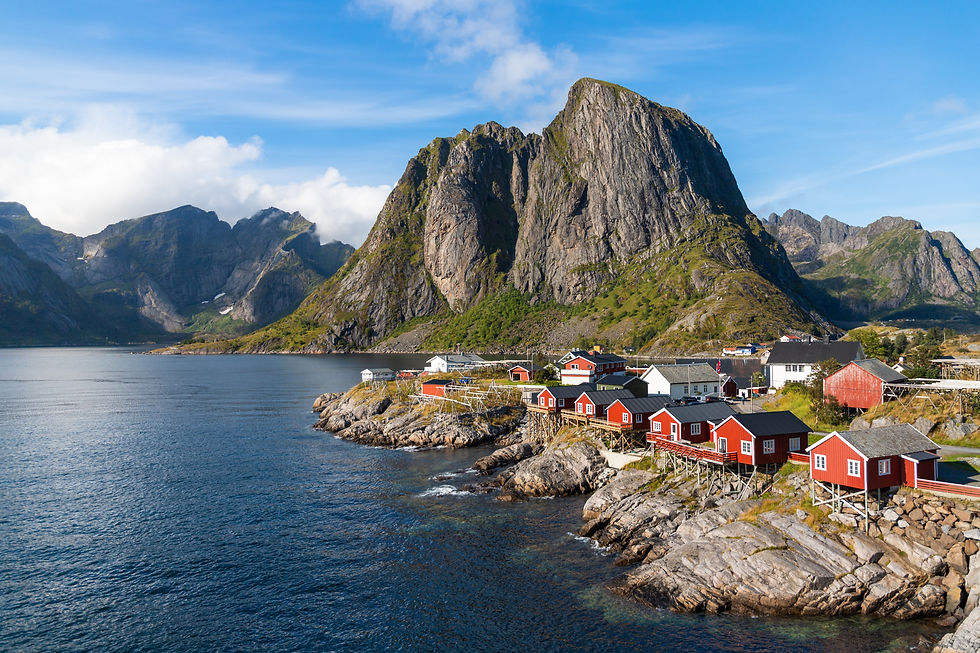
The Lofoten islands rise from the Norwegian Sea as a wall of pointed peaks, with fishing villages, red cabins and white beaches at their feet. For skiers, the defining feature is the vertical relationship with the water. You start your climb close to the shoreline, and every turn of the skins reveals a wider view of fjord, island and open sea. On a clear day the horizon seems to curve.
The second feature is variety. Within a short drive you can choose sheltered valleys when the wind is up, more open bowls when conditions allow, and lines with different aspects as the day moves on. A guide with local knowledge uses that variety to keep you on good snow. This is why we are cautious about describing fixed itineraries: the best route on any given morning depends on the forecast, the snowpack and the group.
The third feature is light. In late winter the days are already long, and in spring the sun lingers low and warm for hours. A day on skis can end with a golden descent and a late dinner, which is part of why many guests choose Lofoten for the quality of the experience rather than the number of vertical metres.
When to go
The ski touring season in Lofoten generally runs from late winter into spring, with conditions varying year to year. Earlier in the season the days are shorter and the snow can be colder and drier. Later, the days stretch, the sun is stronger and the snow can change character through the day, with firmer mornings and softer afternoons. We plan around the forecast, not the calendar, and we tell you honestly if conditions are not what the brochure would imply.
Spring has an added attraction: the combination of long daylight and snow on the mountains. You can ski in the morning, then walk on a beach in the afternoon with snow still on the peaks behind you. For couples travelling together, with one skier and one walker, spring is also kind to both.
If your dates are fixed, say so in your enquiry. If they are flexible, we will suggest the weeks that tend to give the best balance of snow, light and weather, hedging honestly where nature decides. Our overview of Lofoten as a tailor-made destination explains the islands in more depth, and our guide to ski touring across Northern Norway compares Lofoten with Senja and the Lyngen Alps.
Guides, safety and group size
Good ski touring depends on the guide. Our team includes an IFMGA mountain guide and an NF avalanche instructor, and the standard we expect from any partner is the same: conservative decisions, clear briefings, and an honest conversation about conditions every morning. We will always choose a safer line over a more photogenic one.
Expect avalanche safety equipment, a briefing before each day, and a pace set by the group rather than the clock. Group size matters. A private group of two to four allows the guide to tailor the day to your ability and to turn back without pressure. Larger groups can work, but a private day is the most comfortable and gives you the most control over route and timing.
We also ask about experience. Ski touring is not for complete beginners, though strong downhill skiers can often manage with preparation. Tell us how you ski, how fit you are and what you want from the day, and we will match the route and the guide accordingly. If a member of your party does not ski, we will design parallel days: a walk, a photography outing or a quiet morning in the cabin, so nobody is left waiting.
Sample rhythm of a five-day ski touring journey
This is an illustration, not a fixed programme. Mountain days always follow the forecast.
Day 1 – Arrival. A private transfer from the airport, an early dinner and an equipment check. We usually keep the first evening gentle.
Day 2 – A warm-up tour. A moderate objective to settle into the terrain and let the guide see how you move on skis.
Day 3 – The main objective. A longer day on a more committing line, chosen for the conditions, with a late lunch and a slow return.
Day 4 – Flexible day. Another tour, or a rest day with a fjord drive, a fishing-village visit and a good dinner. Rest days matter more than most skiers admit.
Day 5 – A final tour, or departure. A short morning on skis if time allows, followed by the journey home.
We often suggest adding a night or two before or after the skiing, to rest and to take in the islands without skis on your feet.

Fitness, preparation and what to pack
You do not need to be an athlete, but you do need to be comfortable on your feet for several hours. A typical touring day involves steady climbing at a modest pace, regular pauses to eat, drink and adjust layers, and a descent that is more tiring than it looks. Walking, cycling or uphill hiking in the weeks beforehand makes a real difference, as does a few days of skiing on piste if you have the chance.
Layering is the key to comfort. Climbing generates heat while the summit and the sea wind take it away, so pack a wool or synthetic base layer, a light insulating layer, a windproof and waterproof shell, a warm hat, a buff or scarf, thin gloves for the climb and warmer mittens for the descent. Cotton has no place in the bag. Goggles and sunglasses are both worth having, because the light can swing from flat grey to dazzling within an hour.
Beyond clothing, we ask about injuries, medication and any concerns, so the guide can adapt the day. A good journey leaves you tired but not depleted, with enough energy left for dinner and conversation.
Where to stay and how to eat
Lofoten offers a range of stays, from private cabins by the water to comfortable lodges, and our approach is the same as elsewhere: we match the accommodation to the people. A couple might prefer a secluded cabin with a view; a group of friends might want a larger shared house. We do not name properties in public, but we will propose specific options in your journey plan.
After a day on skis, food matters. Northern Norway has a strong tradition of local seafood and Arctic ingredients, and we can plan culinary evenings built around what is in season. Tell us about dietary needs early. Vegetarian, vegan, gluten-free and lactose-free requirements and common allergies can be catered for when we know in advance.
Warmth and drying space are underrated luxuries on a ski trip. We ask for details about boot drying, sauna access and quiet rooms when we plan, because tired legs deserve a proper evening.
Combining skiing with the rest of Northern Norway
Lofoten rarely needs to stand alone. Many skiers combine it with Tromsø for a few nights, adding a private northern-lights evening or a fjord day, and some link it with Senja or the Lyngen Alps for a longer touring journey. We handle the transfers, the flights where needed and the sequencing, so that you are not repacking skis more often than necessary. Our guide to travelling from Tromsø to Lofoten explains the options.
A multi-destination route works best when it is not rushed. Two bases for a week is usually kinder than four, and it leaves room for the weather to rearrange a day without breaking the plan.
If you are travelling as a couple with different interests, one of you skiing and one not, a combined journey solves that naturally: skiing in Lofoten, then a slower few days in Tromsø where both of you can share a private evening under the sky.
Frequently asked questions
What level of skier do I need to be?
Ski touring in Lofoten suits strong skiers who are comfortable on varied terrain and fit enough for several hours of climbing. Some previous touring experience is helpful. Tell us honestly how you ski, and we will match the route, the pace and the guide.
When is the best time to ski tour in Lofoten?
The season generally runs from late winter into spring, with conditions varying each year. We plan around forecasts and snowpack rather than fixed dates, and we advise on the weeks that usually balance snow, light and weather.
Do I need my own equipment?
That depends on your plans. We discuss equipment, avalanche safety gear and rentals when planning, so you arrive prepared. Share what you already own in your enquiry.
Can my partner join if they do not ski?
Yes. We design parallel days with walks, photography, fjord drives and quiet time, and bring you together for dinners and for other parts of the journey.
How far ahead should we book?
Our recommended lead time is six to twelve months, especially for peak seasons. Last-minute enquiries are welcome, subject to availability.
Plan your Arctic journey
If a ski touring week in Lofoten appeals, tell us how you ski and when you would like to travel, and we will reply within one business day with first ideas, built around your ability and the islands' conditions.


Comments