
Getting from Tromsø to Lofoten: Road, Sea and Air

Getting from Tromsø to Lofoten can be done by road, by sea or by air, and each option suits a different kind of traveller. The road is long but scenic, typically a full day with a ferry crossing. A regional flight is the fastest, often well under an hour in the air. A coastal ship is slow and rewarding. For most of our guests, the right answer depends on the season, the number of nights available and how much of the journey they want to see.
This article explains the three routes in general terms, the trade-offs between them, and how we combine them in a tailor-made itinerary. Schedules, ferry timetables and flight availability change by season and by year, so please read the specifics below as a guide to how to think about the choice. We confirm the current options when we design your journey.
The distance, and why it surprises people
On a map, Lofoten looks close to Tromsø. In practice, they are separated by fjords, mountain passes and open sea. Northern Norway is long and indented, and a straight line tells you almost nothing about travel time. The drive can take the better part of a day even in good conditions, and in winter, with short daylight and variable weather, a day is the sensible planning assumption.
That matters because it changes what the transfer is. If you treat it as a quick hop, you will arrive tired and disappointed. If you treat it as part of the journey, with time for stops, a good lunch and a guide who knows where the best views are, it can be one of the highlights. The question is not how to minimise the transfer, but how to choose the one that fits your trip.
Mainland, islands and the in-between
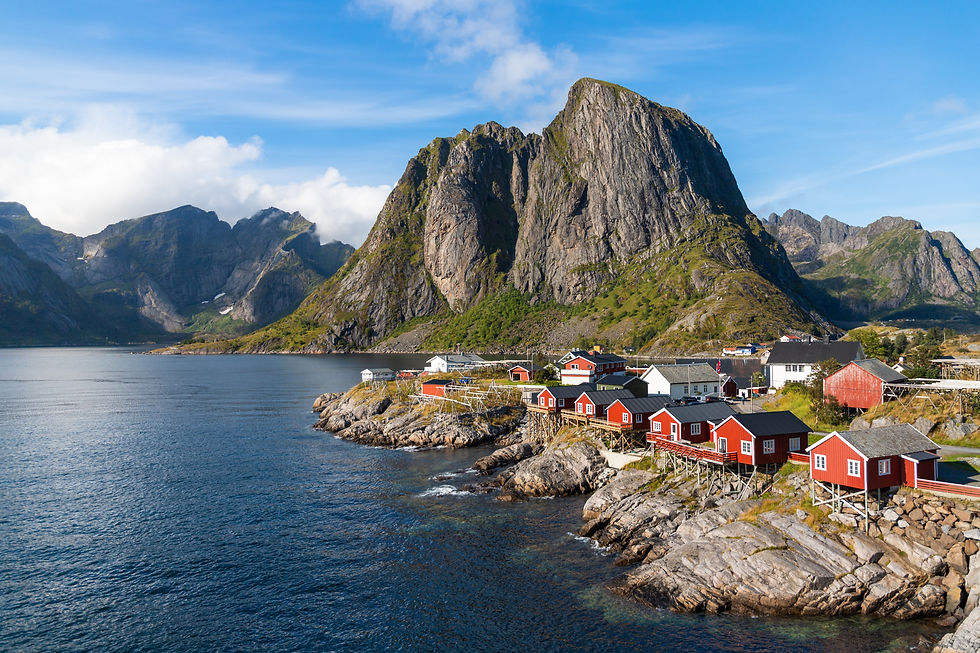
Lofoten is an archipelago, connected to the mainland by bridges and, depending on your route, by ferry. Its character changes as you move along the island chain, from the busier harbour town in the east to the quiet villages and beaches farther west. Where in Lofoten you arrive, and where you stay, has a considerable effect on the transfer time. Our guide to Lofoten, tailor-made describes the character of the different areas.
By road: the scenic day
Driving is the option that shows you the most. The route runs south from Tromsø along the coast and through the fjord country, with the mountains rising on both sides. Depending on the route chosen and the season, there may be one or more ferry crossings, and the timing of those crossings sets the pace of the day. In winter we plan the drive for the middle of the day, when the light is best, and we keep an eye on road conditions throughout.
We do not recommend self-driving in winter for guests who are not used to snow, ice and darkness. That is the main reason we provide a professional driver in one of our premium Mercedes vehicles. The driver knows the roads, reads the conditions, decides when to stop, and removes the stress of navigation. You sit back, take photographs and talk.
Book this if / skip it if
Choose the road if you want to see the landscape between the two destinations, you enjoy a long day with stops, and you have a night or two to build in. It is excellent for couples who treat travel as part of the pleasure. Skip it if you have only a short stay, are prone to travel fatigue, or would rather spend the daylight at your destination.
By air: the quick connection
A regional flight can take you from Tromsø to the Lofoten area in a short time, avoiding the long drive. Availability depends on the season, the day of the week and the airline schedule, and the planes are small, so luggage limits can be stricter than on larger aircraft. Because flights can be affected by weather in the Arctic, we always include some slack in the plan rather than building a tight connection around a flight.
The advantage is time. If you have five days and want to see both Tromsø and Lofoten, a flight can save most of a day, which is half a day more on the ground for each destination. For travellers arriving from far away, such as the United States, Australia or Asia, who already face a long journey, a short flight can feel like a sensible compromise.
Choose the flight if time is the constraint, the weather forecast is stable, and you do not mind a smaller aircraft. Skip it if you want flexibility, you are carrying bulky photographic equipment, or your itinerary is tight and a weather delay would disrupt something important.
By sea: the slow way
Coastal ships run along the Norwegian coast, and some routes connect the north with the islands. A sea journey is slow, but it offers a different view: the coastline from the water, the changing light, and the unhurried rhythm that appeals to slow travellers. It requires more time than a road trip or a flight, and the schedules are fixed, so it fits best into a longer itinerary of ten days or more.
Private yachts are also possible through partners for guests who want a more exclusive sea passage or a day on the water between the destinations. This is a bespoke arrangement, planned case by case, with the details agreed in the proposal. If you are interested, tell us when you first write, as it affects the shape of the whole journey.
How we combine the options
The best transfer plan is often a mixture. A common pattern for a seven-night journey is to drive one way, with an overnight stop or a long lunch, and fly or drive back depending on the forecast and the schedule. Another is to fly out, collect a vehicle and driver on arrival, and spend the days exploring by road within Lofoten.
Seven nights: three in Tromsø, four in Lofoten. Drive or fly across on day four, with the transfer planned for the middle of the day.
Ten nights: add a night on the way, perhaps on Senja or in a fjord village, to break the road journey into two gentler stages.
Fourteen nights or more: a slower route that includes the coast, the Lyngen Alps and Senja, with a sea passage if the season suits.
The seven-night pattern is described in more detail in our article on seven days across Tromsø, Senja and Lofoten. For guidance on combining several places without tiring yourself, see combining several Arctic destinations without hotel-hopping fatigue.
Season matters
In winter, daylight is limited, roads can be icy, and weather can delay ferries and flights. The best approach is to keep the transfer short and to build in a spare day at the end of the trip, so that a delay does not cost you a connecting flight home. In the polar night months, the drive happens largely in blue twilight, which is beautiful in its own way, but not suited to a rushed schedule.
In late winter, from February to March, the days are longer and conditions more stable, and the drive is easier. In summer, the midnight sun, from roughly 20 May to 22 July in Tromsø, makes the road trip a different experience, with daylight at any hour and the possibility of a very late departure. Ferries can be busier in summer, and booking ahead matters. Our guide to Lofoten in winter adds more detail about what to expect there in the cold months.
A note on luggage and the last day
If you fly out of Lofoten at the end of the trip, remember that connections back to Tromsø or Oslo may be limited and are sometimes affected by weather. We plan the last day with a buffer, and we do not schedule an important international departure on the same day as a regional flight from the islands. It is a small rule, and it saves the trips that would otherwise go wrong.
Choosing your route
The simplest way to decide is to ask three questions. How many nights do you have? How do you feel about long days in a vehicle? And how important is it to see the landscape between the two places?
If you have five or six nights, consider staying in Tromsø and taking day journeys, or choosing Senja as your second base, which is nearer and easier. If you have seven to ten nights, Lofoten becomes feasible, and the choice between road and air becomes a matter of taste. If you have more than ten, the journey itself becomes part of the holiday. Our comparison of Tromsø or Lofoten can help if you are still weighing the destinations.
Whatever you choose, the transfer is a service we design and run on your behalf. Your timings, the vehicle and driver, bookings and tickets are in your personal digital travel dashboard, and our team is available before and during the trip if anything changes.
Frequently asked questions
How long does it take to get from Tromsø to Lofoten?
By road it is typically a full day, including a ferry crossing, depending on the route, the season and where in Lofoten you are going. A regional flight is much quicker in the air, though you must allow time for airports. We confirm the current options and timings when we design your journey.
Is it safe to drive from Tromsø to Lofoten in winter?
It can be done, but conditions are demanding, with snow, ice, darkness and changing weather. We do not recommend self-driving for guests unfamiliar with these conditions. Our professional drivers in premium vehicles know the roads and decide when to stop, wait or change plans for safety.
Can I fly between Tromsø and Lofoten?
Regional flights serve the area, though schedules vary by season and are affected by weather. The aircraft are small, so luggage limits can be stricter. We usually build slack into the plan and avoid scheduling a tight international connection on the same day as a regional flight.
Is a coastal ship a good option?
For travellers with plenty of time, yes. It is slow but offers a different view of the coast and a relaxed rhythm. Schedules are fixed, so it suits a longer itinerary. We can also arrange private yacht passages through partners as a bespoke alternative, agreed case by case.
How many nights do I need for Lofoten?
We usually suggest at least three nights in Lofoten, and ideally four, so that the transfer does not consume the whole stay. With five or six nights in total, you may prefer Tromsø alone or Tromsø with Senja, which is closer and easier to reach.
Plan your Arctic journey
Tell us how many nights you have and what you would like to see in Lofoten, and we will choose the route and the pace that suit the two of you. We reply within one business day with first ideas.


Comments