
Shoulder Season in Northern Norway: Fewer People, Same Sky

Shoulder season is the quieter stretch between the busy months, and in Northern Norway it often delivers the same sky for fewer people. In practice, "off season" in the Arctic is a misnomer. There is always something to see: autumn colours and the first auroras in September and October, the pale returning light of April, the green hush of late May. What changes is the crowd, the pace and the flexibility you have to design something personal.
This guide looks at the shoulder seasons through the eyes of a couple planning a private journey. It explains which weeks fall into them, what you gain and what you give up, and how a tailor-made itinerary can turn a quieter calendar into an advantage.
Which weeks count as shoulder season
Northern Norway has two clear peaks. The first is the winter high season, centred on December and running through February and March, when the northern lights, snow and polar night draw the most visitors. The second is the summer, when the midnight sun, long hikes and coastal drives fill the calendar, and which has been growing quickly in recent years.
The shoulder seasons sit between them. In practice, we think of three windows.
Autumn: September to October
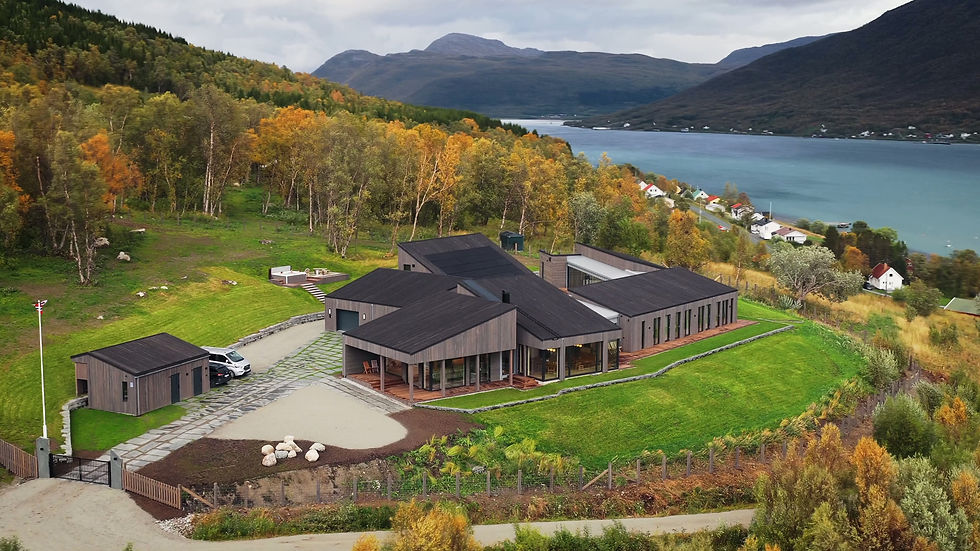
The aurora season begins in September, and the mountains turn gold and red as the birch leaves change colour. Evenings darken early enough for the lights, but days are still long enough for full outdoor programmes. Crowds are small, and the weather is a mixture of crisp days and moody, changeable ones.
Early winter: November
November is a transitional month: snow arrives, the polar night approaches and the whale season in the fjords begins. It has become a busier month in recent years, yet it remains calmer than December. Our guide to Tromsø in November covers it in detail.
Spring: April to May
April brings long days with snow still on the ground, and the northern lights season ends in the first part of the month. May is typically the quietest time of the year, as the snow melts at lower levels and the summer activities have not yet fully started. It can be a rewarding time for travellers who enjoy a changing landscape and have flexible expectations.
What you gain by travelling outside the peaks
The advantages of shoulder season are quieter than the advertising for the high season, but they are real.
Space and privacy
Fewer visitors mean easier access to the places you want to see. Viewpoints are less crowded, restaurants are easier to book and roads have less traffic. For a couple who values privacy, the difference is tangible. A private fjord day feels even more private when you meet few other people on the shore.
Availability and flexibility
Lodges, private apartments and experienced guides are easier to secure outside Christmas, New Year and the main winter weeks. That gives us more room to design the exact journey you want, rather than adapting your plans to what remains. If your dates are flexible, it can also help you stay in a particular lodge or cabin that is often fully booked at the peak.
A different character
Each shoulder season has its own mood. Autumn feels golden and reflective, with mirror-calm fjords and the first lights of the year. Spring is bright and expectant. These seasons are not lesser versions of winter and summer; they are distinct, and many returning guests tell us they came to prefer them.

What you give up, honestly
A fair guide has to say where shoulder season falls short. Some trade-offs matter to certain travellers more than others.
Fewer hours of darkness in spring. By April the nights are short, and the aurora season is nearly over. If the lights are your only goal, choose the heart of winter.
Less snow in autumn and late spring. Dog sledding, snowmobiling and snowshoeing depend on snow cover. Early in the season there may not be enough, and late in the season the snow retreats from lower ground. Your guide can tell you what is possible for your dates.
Changeable weather. Autumn and spring can bring rain, sleet and wind. We plan with flexibility and always offer indoor or alternative options.
Some activities on a reduced schedule. Certain seasonal experiences begin or end within these periods, and availability depends on conditions.
None of these is a reason to avoid shoulder season, but each is worth weighing against what you most want from the trip.
A shoulder-season journey, by month
The examples below illustrate how we might build a private week at different times of the year. All are sketches that we would adapt to your tastes.
September or October: gold and the first lights
A week might combine a private fjord drive to Sommarøy and Kvaløya under autumn colours, an easy mountain walk, a Sámi culture experience, a chef-led dinner built around local ingredients and two or three evenings left free for the northern lights. Our article on autumn northern lights explains what to expect from the sky.
November: the quiet before the peak
The first snow arrives, the days grow short and the fjords start to fill with herring, bringing whales. A November journey might add a whale-watching day by RIB or by quiet hybrid-electric ship around Skjervøy, snowshoe hikes, and long evenings in a warm lodge. It is a restful time, with some of the Arctic atmosphere that people travel for.
April or May: light returns
In April the snow is still thick, and a journey can include ski touring with an IFMGA guide, a day at sea, or a gentle walk in the bright afternoon. In May the landscape transforms again. Our guide to Tromsø in April gives more detail, and for a broader comparison, our best time to visit Tromsø article sets every month side by side.
Book this if, skip this if
Shoulder season suits you if:
You want a quieter, more private Arctic journey with room for slow days.
You enjoy changing landscapes: autumn colour, thawing fjords, returning light.
You are flexible about the weather and happy to follow your guide's advice.
You want a lodge, apartment or guide who might be hard to secure in peak weeks.
Choose the peak instead if:
You are travelling for a particular occasion, such as Christmas or New Year, where the date is fixed.
You want deep snow and the longest nights for the northern lights.
You are set on a specific activity, such as dog sledding, that depends on reliable snow.
How to plan a shoulder-season journey well
Quieter months do not mean last-minute planning. Long-haul travellers, particularly those coming from North America, Australia and Asia, usually plan months in advance, and the best accommodation still fills early. We recommend six to twelve months ahead for peak times, and a little earlier than you think for shoulder dates if you have a particular lodge or experience in mind.
A few principles help. Choose at least five nights, so that a single run of poor weather does not define the trip. Leave a flexible day or two in the programme so that your guide can respond to forecasts. Pack for all conditions, using layers rather than a single heavy coat, and be prepared for rain as well as snow in autumn and spring.
It also helps to think about combinations. A shoulder-season journey can link Tromsø with Senja or Lofoten, where the scenery is dramatic even in changing light. Our guide to Senja versus Lofoten helps you choose where to add days, and our approach to pricing and payment explains how the journey is quoted as one complete experience.
Finally, trust the guides. In the shoulder months more than any others, local knowledge turns uncertain weather into opportunity. A guide who has watched the Arctic sky for many years knows when a gap in the cloud will arrive and where to drive to meet it.
Frequently asked questions
Is the shoulder season worth it for the northern lights?
September, October and early spring all fall within the aurora season, which runs from September to early April. The lights are never guaranteed. The mid-winter months offer longer darkness, but shoulder weeks can be very rewarding with fewer people.
Will there be snow in autumn or May?
Not reliably at low levels. Snow typically arrives in October or November and recedes in April and May. If snow activities are a priority, tell us your dates and we will advise what is realistic.
Are all experiences available in shoulder season?
Many are, but some depend on snow, daylight or season. Whale watching, for example, centres on November to January around Skjervøy. We build your itinerary around what works for your dates and have alternatives ready.
Is it cheaper to travel in shoulder season?
We price each journey as a complete experience tailored to you, so we do not offer a simple comparison. What you gain is availability, space and flexibility. Ask for a budget idea at enquiry and we will design to it.
How many nights do you recommend outside the peak?
We recommend at least five nights anywhere in the Arctic, whatever the season. Weather changes quickly, and a longer stay gives flexibility to catch the best conditions for your priorities.
Plan your Arctic journey
If a quieter month appeals, tell us your preferred weeks and what you most want to see, and we reply within one business day with first ideas for how to make the season work for you.


Comments