
Tromsø in September: Autumn Colour and the First Northern Lights

September is the month when two Arctic seasons share one fortnight. The long summer light is still there in the first days, the birch and bilberry slopes above the fjords turn yellow and red by the middle of the month, and by the last week the sky is dark enough, on a clear night, for the first northern lights of the season. For the two of you, planning a private journey, it is one of the most rewarding months to be in Tromsø: quieter than the winter peak, gentler on the budget of effort, and full of changing light.
It is also a month that rewards a flexible plan. Weather moves quickly in early autumn, daylight shortens by several minutes every day, and the right itinerary shifts from fjords and hillsides in the first half of the month to evenings built around the sky in the second. This guide explains what to expect, how to build the days, and who September suits best.
What September is actually like in Tromsø

The first thing to understand is how fast the light changes. At the start of the month Tromsø still has around fifteen hours of daylight, with a long, soft evening. By the end of September that has fallen to a little under twelve hours, and the equinox, around 22 or 23 September, marks the point where day and night are roughly equal. After that, the nights lengthen quickly. A guest arriving on the first of the month and one arriving on the thirtieth will, in effect, visit two different places.
Temperatures are mild by Arctic standards. Typically you can expect single digits to low teens in °C by day, cooler in the evening and cooler again on the water or on exposed ground. Rain is common and so is wind, but so are clear, crisp days when the air is very still and the mountains look close enough to touch. It is possible to see the first dusting of snow on the higher peaks by late in the month, while the town and the shoreline remain green and gold.
The colours of the hills
The landscape is the reason many guests choose September over winter. Birch woodland turns yellow, dwarf shrubs on the open hillsides turn deep red and orange, and the contrast with dark water and pale rock is strong. The colour tends to peak in the middle of the month at lower altitude and slightly earlier higher up, but it varies from year to year, so we describe it as a window rather than a date. The scenic fjord routes around Kvaløya and Sommarøy are particularly good for it, as are the quieter inlets such as Ersfjord and Grøtfjord.
A calmer town
Tromsø in September has the easy rhythm of a working city that has just finished its summer. Cafés and restaurants are open and unhurried, and there is room to book a table or a private guide without competing with the Christmas and February peaks. If you like the idea of an Arctic journey without a crowd, this is one of the best times to arrive. See our guide to the best time to visit Tromsø for how September compares with the other months.
The northern lights return
The northern lights season in Tromsø runs from September to early April, and September is the opening of it. The city sits under the auroral oval, which means displays are often visible even when the activity forecast is modest. The practical difference in September is that you need real darkness, and that arrives later in the evening than it will in winter. In the first week of the month it may still be too light for a good display until close to midnight. By the last week, darkness is reliably there from the late evening.
One advantage of September is the quality of the sky. The air is often clearer and the sea is not yet frozen or covered by snow, so a still fjord can reflect the lights in a way that is harder to find in deep winter. A private evening with a local guide, away from the city glow, is the natural centrepiece. Our guides watch the cloud as well as the forecast, and the car moves to where the sky is open: clouds over the city often mean clear skies one to three hours inland.
As always, the northern lights are never guaranteed, and September is no exception. We plan for several evenings rather than one, and we keep the days relaxed enough that a late night is a pleasure rather than a problem. If you would like to understand the evenings in more detail, our guides to autumn northern lights in Tromsø and the equinox effect go into the science and the timing.

A sample four-night September journey for two
The days below show how we typically shape a late-September stay. In the first half of the month we would lean more heavily on daylight, and in the second half we would protect the evenings. Everything is private, with a dedicated guide and driver, and the order changes with the weather.
Day one: arrive and settle
An airport transfer in one of our premium vehicles takes you to the city, and the first afternoon is deliberately open. A walk along the waterfront, an early dinner of local ingredients, and an early night help the body adjust, especially after a long-haul flight. If you are arriving from the United States, the first evening is not the time for a big excursion.
Day two: the fjord day
A private fjord day to Sommarøy and Kvaløya is the best way to see the autumn colours. The road follows the coast through villages, over bridges and past beaches of pale sand, with stops for photographs wherever the light is good. Lunch is unhurried. Many of our guests choose this as the first full day because the scenery is spectacular in almost any weather and it needs no preparation. In the evening, a quiet dinner in the city.
Day three: hills in the morning, the sky at night
A guided walk on the hillside above the city, at an easy pace, is the best way to be inside the autumn landscape. The afternoon is for rest. After an early dinner, the private northern lights chase begins in the late evening, with a warm vehicle, hot drinks and a guide who reads the cloud and decides where to go. Expect a late night.
Day four: culture and a slow finish
A late start is sensible after the night before. The day can include a Sámi culture experience in the afternoon, or a private tasting of Arctic ingredients, followed by a second evening under the sky if you have the energy. Five nights gives a better chance of clear weather, and it is what we normally recommend. Four is the minimum we would plan for.
Book September if, skip it if
September is not the right month for everyone, and we prefer to say so plainly.
Book September if you want a quieter Tromsø, you enjoy changing light and landscape, and you would like a first chance at the northern lights without the cold of deep winter.
Book September if you are travelling as a couple and would like a more relaxed pace, with room for long lunches and unhurried drives.
Book September if you want to combine scenery and aurora in one journey, perhaps with a few days on Senja or in the Lyngen Alps.
Skip September if your priority is snow, dog sledding or a deep-winter landscape. Those belong to the months from November onwards.
Skip September if you need the darkest possible skies on a specific date in the first week. The darkness arrives later in the evening and the display may come close to midnight.
Skip September if you want a guarantee. The northern lights are never guaranteed in any month, but the margin for error is slimmer when the dark hours are fewer.
If you are unsure between September and the heart of winter, our guide to Tromsø in August shows the other end of the shoulder season, and our planning pages explain how we compare months for a particular couple.
Beyond Tromsø: adding Senja or the Lyngen Alps
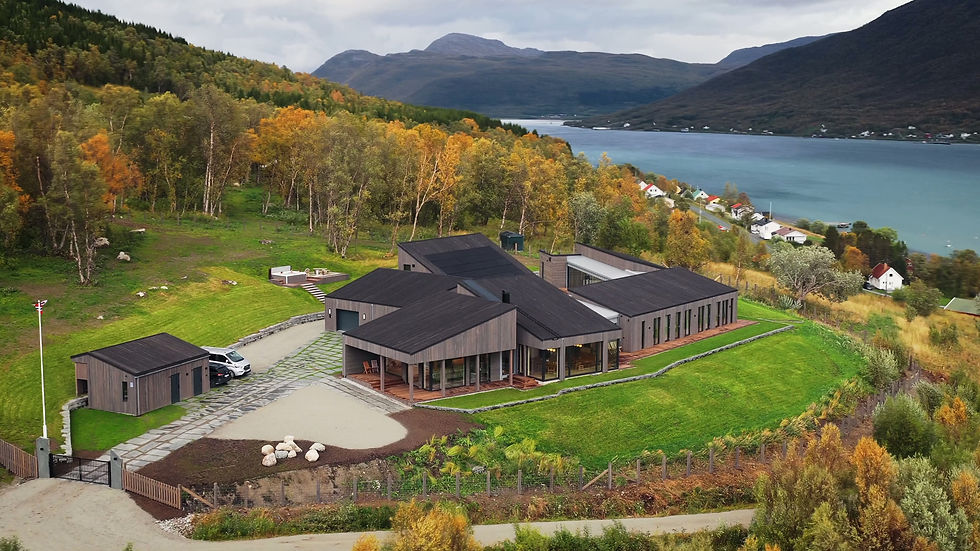
September is one of the best months to leave the city. The roads are clear, the days are long enough for a proper drive, and the mountains are at their most colourful. Senja, a few hours south by road, is known for jagged peaks rising straight from the sea, and the scenic route is a full day by itself. Many of our guests turn it into a two-night stay in a quiet lodge, which also gives a second, darker sky away from the city lights.
The Lyngen Alps, to the east, are better known for ski touring in spring, but in September they offer some of the most dramatic mountain views in Northern Norway without the need for any technical skill. We would normally combine either destination with a few nights in Tromsø rather than replace it, so that the journey has both a city rhythm and a wilderness one.
What to pack
Think layers rather than bulk. A wool base layer, a warm mid-layer, a wind- and waterproof shell, a hat and light gloves, and sturdy walking shoes or boots cover most days. For the evenings under the sky, add a warmer layer and insulated boots, since the temperature drops quickly once the sun has gone and you are standing still. Thermal suits are provided on some tours, but not all, and we tell you in advance which ones.
Frequently asked questions
Can you see the northern lights in Tromsø in September?
Yes, the season begins in September and runs to early April. Darkness arrives later in the evening early in the month, so the best chances come in the second half. The lights are never guaranteed, which is why we plan several evenings rather than one.
How cold is Tromsø in September?
Typically mild by Arctic standards, with daytime temperatures in single digits to low teens in °C. Evenings and time on the water are cooler, and wind and rain are common. Layered clothing works better than a single heavy coat, and we advise on what to bring for each activity.
Is September better than winter for a first Arctic trip?
It depends on what matters to you. September offers colour, long days and a quieter town, with a first chance at the aurora. Winter offers snow, polar night and deeper darkness. Many couples choose September for a gentle introduction and return in winter for snow activities.
How many nights should we plan for in September?
We recommend at least five nights, which gives several evenings for the northern lights and a buffer for weather. Four nights is possible if you are short of time, and an additional two or three nights on Senja or in the Lyngen Alps works well.
Do we need to book far in advance for September?
Our standard advice is six to twelve months for peak periods, and September is quieter than the winter peak, so there is usually more flexibility. Long-haul travellers still benefit from planning early, because private guides and lodges are limited. Our booking timeline guide explains the sequence.
Plan your Arctic journey
If a September journey of colour, calm and the first northern lights sounds right for the two of you, we will shape it around your dates, your pace and the kind of evenings you want. Tell us a little about your plans and we reply within one business day with first ideas.


Comments