
Taking the Board Meeting North: An Arctic Leadership Offsite

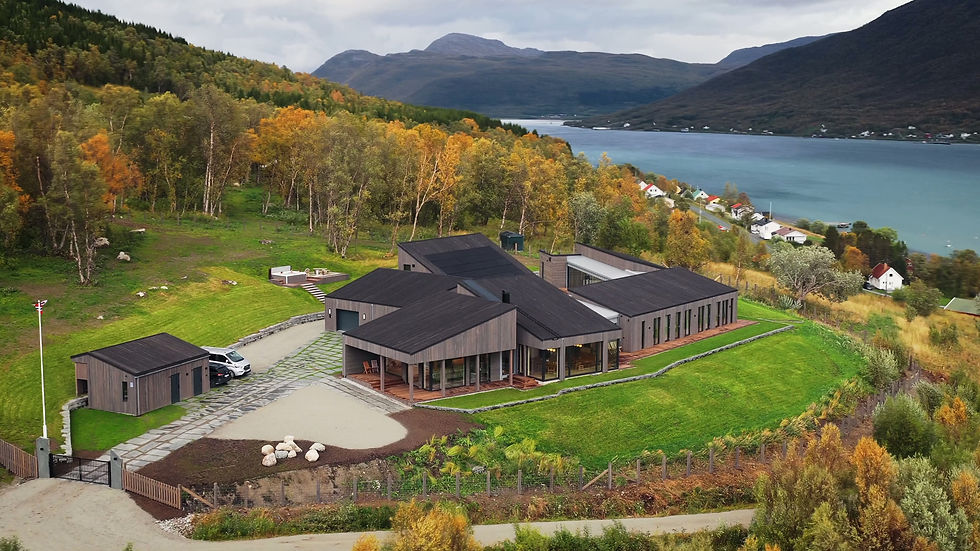
Moving a board meeting, a leadership retreat or a strategy session to the Arctic changes the conversation before it begins. The setting removes the usual cues of the boardroom: no glass tower, no familiar screens, no corridor chatter. Instead there is a lodge with a fire, a window onto a fjord and a landscape that makes small agendas look smaller. Done well, it produces better thinking and, just as importantly, better relationships between the people in the room.
This guide explains how a small executive group can hold a working session in Northern Norway without losing the discipline of a proper meeting. It covers venue, rhythm, experiences and logistics, and it is written for the person tasked with making the event work: a chief of staff, an executive assistant, a founder organising an offsite for a handful of senior colleagues.
Why take a leadership group north
The case for an Arctic offsite rests on three things: focus, perspective and shared experience. None of them is unique to Northern Norway, but the region delivers them with unusual clarity.
Focus
A remote lodge is naturally low in distraction. There is no commute, no drop-in visitor and no easy escape to the office. People arrive, settle and give the agenda their attention. The short days of winter add a gentle structure: when darkness falls mid-afternoon, the group tends to gather, eat together and talk, which is often when the best exchanges happen.
Perspective
Standing on a snowy hillside beneath a vast sky is a good reminder of scale. Executives frequently say that decisions feel clearer when they have been outdoors for a few hours. We cannot promise that, of course, but the principle is well understood: a change of physical context can unlock a change of thinking.
Shared experience
The moments people remember are rarely the slides. They are the dog-sledding afternoon, the shared dinner, the quiet walk where two colleagues finally talk through a long-standing disagreement. A well-designed programme leaves room for these without forcing them.

Designing the rhythm of the days
The biggest mistake in a destination offsite is to pack the days with activities and call the result a retreat. The best programmes protect the working time and treat the experiences as a counterweight, not a competitor.
A working structure that holds
For a small group, we suggest anchoring each day around one or two focused sessions, with generous breaks and at least one extended block outdoors. The mornings are usually the best time for demanding discussion, when energy is highest, though in winter the light can encourage a late-morning start.
Morning: the main working session, held in a private room with natural light and a view.
Midday: a long lunch that is part of the programme, not a gap in it.
Afternoon: an outdoor experience that gets people moving and talking in smaller groups.
Evening: dinner as a shared event, followed by free time or a quiet conversation by the fire.
Leaving room for the unplanned
Leave at least one afternoon open. The best conversations often start spontaneously, and a rigid schedule can suppress them. We also keep contingency plans: the Arctic weather can change, and an indoor alternative should be ready for each outdoor activity.

Experiences that suit senior groups
Legendary Arctic arranges corporate retreats and incentive trips for small groups, and larger events through MICE partners. For a board or leadership team, the aim is quality, privacy and ease. Several of our experiences fit well into a working programme.
Outdoor experiences that encourage conversation
A guided snowshoe hike is gentle enough for almost any fitness level and gives a long stretch of side-by-side walking, which is excellent for conversation. Dog sledding adds a shared adventure without demanding athletic skill. Snowmobiling suits groups who want pace and a little exhilaration. For those with more energy, ski touring with qualified guides is available in the Lyngen Alps, on Senja and in Lofoten.
Culture and place
A Sámi culture and reindeer experience offers insight into a very different relationship with the land, and many executives find it the most thoughtful part of the trip. We approach it respectfully, with attention to the people who share their traditions with us. A guided look at Tromsø's polar history adds context for groups interested in exploration and leadership.
Food and evenings
A culinary journey with local ingredients and fine wines is a natural centrepiece for a group dinner. Private chefs can cook in a lodge, and the right table, with the right pacing, does more for a team than any icebreaker. On a clear winter night, a northern lights evening in luxury vehicles can end the day with something none of the group will forget, although the lights are never guaranteed and we plan the evening to be enjoyable regardless.
Venue and logistics
Where you stay shapes the whole event. We work with luxury Arctic lodges, exclusive private apartments and secluded wilderness cabins, and we choose them by function: a lodge with a private meeting space for the working sessions, rooms for each participant and a kitchen or dining room that can host the group.
Getting there
Tromsø is served by direct flights from Oslo and several European cities, so executives can usually reach the Arctic in a single day from major hubs. For groups coming from further afield, we plan arrival with a rest day, because jet lag does not respect meeting schedules. Private transfers in our premium Mercedes fleet, driven by professionals, meet each arrival and move the group together.
Connectivity and confidentiality
Executives need to be reachable when they must be and offline when they should be. We discuss connectivity requirements early and plan private spaces for sensitive discussions. We share your details only with the partners who are needed to deliver the programme.
Group size and complexity
The trip-design fee is set for up to eight guests; groups above that, or complex itineraries, are custom quoted. For events beyond a small leadership team, we work with MICE partners to manage the scale. Our article on executive retreats in an Arctic lodge and our piece on incentive trips to Tromsø cover related ground.
A sample three-day leadership offsite
This outline suggests how the elements fit together for a group of six to eight. It is a framework, not a script, and every element can be changed.
Day one: arrival and orientation
Private transfers deliver the group to the lodge in the afternoon. A short welcome session sets the aims of the retreat, followed by an early dinner and an unhurried evening. The aim is to arrive properly rather than to start work too quickly.
Day two: the core work
A full morning session addresses the main agenda. After lunch, a guided outdoor experience, such as snowshoeing or dog sledding, shifts the mood and the groupings. A second shorter working block in the late afternoon captures the thinking that emerges. Dinner is a shared event with local food and good wine, and the evening is open.
Day three: decisions and departure
A closing session turns discussion into commitments: who owns what, by when. A relaxed final lunch gives people time to talk informally. Transfers to the airport are timed with a safety margin for winter flights.
Longer events, of four or five nights, allow space for more activities, a second destination such as Senja or Lofoten, or a calm day for independent time. Because the Arctic is unpredictable, we recommend at least a day of buffer around important sessions.
Is this right for your group?
An Arctic offsite suits your team if:
You want focused, private time away from the usual distractions.
The group is willing to be outdoors in the cold for part of each day.
You value shared experiences as part of building trust.
You can plan months ahead and allow time for travel from other regions.
Think again if:
The meeting depends on constant live access to central systems or large teams.
Participants have mobility limits that make winter conditions difficult, unless an adapted programme is possible.
Dates are fixed at short notice and peak winter lodges are already full.
We recommend planning six to twelve months ahead, especially for peak winter, and the sooner you share your dates and the size of the group, the more choice you have. Our guide to how far in advance to book explains the reasoning, and our pricing page describes how journeys are quoted as one complete experience.
Frequently asked questions
How many people can you host for a board or leadership retreat?
We design retreats for small groups, from a handful of directors to larger leadership teams. Our trip-design fee applies to groups of up to eight, and larger or more complex groups receive a custom quotation. Larger events are arranged with MICE partners.
Can the working sessions take place at the lodge?
Yes. We select lodges with private rooms suitable for meetings, with natural light and quiet. We discuss your requirements, such as screens or break-out spaces, at the planning stage and arrange the setup in advance.
What if the weather disrupts an outdoor activity?
Weather changes quickly in the Arctic, so we plan alternatives for every outdoor element. Guides decide on the day whether conditions are safe, and an indoor or adapted option is always ready so that the programme keeps its shape.
Do you handle flights and group travel logistics?
We manage reservations and bookings within Norway, including transfers, accommodation and experiences, and give guidance on routes to Tromsø. Every journey includes a personal digital dashboard and dedicated support before and during the trip.
When is the best time of year for an Arctic offsite?
It depends on your goals. Winter offers snow, polar night and the northern lights season from September to early April. Summer has midnight sun and long days. We advise on timing based on your group and priorities.
Plan your Arctic journey
If you are considering taking your leadership team north, tell us the size of the group, your preferred season and what the retreat needs to achieve, and we reply within one business day with first ideas.

Comments