
Lofoten in Summer: Hiking, Beaches and Endless Light

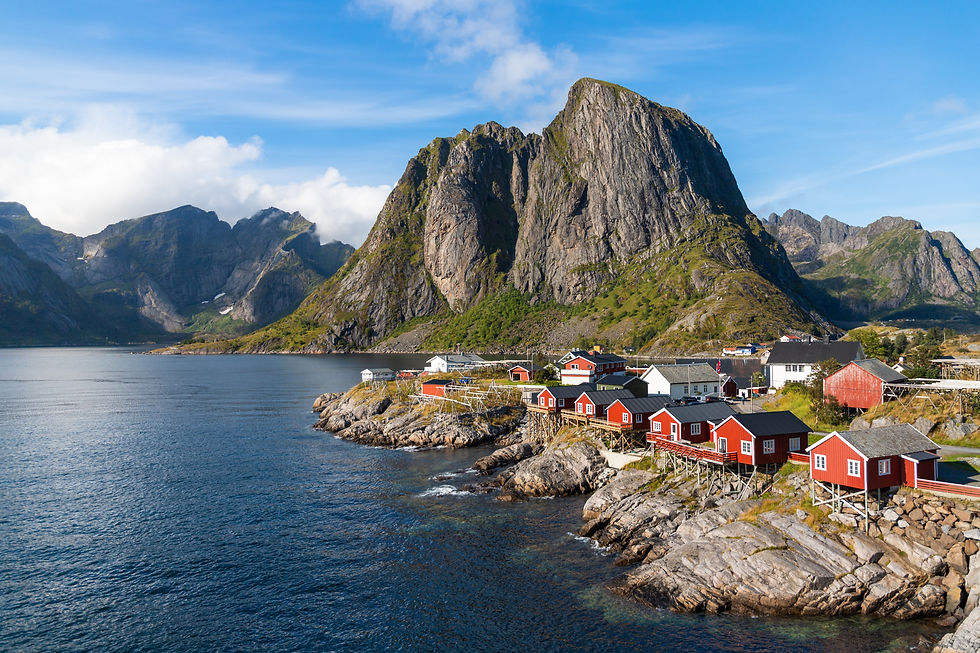
Lofoten in summer is a landscape of contrasts that looks almost implausible at first glance: sharp granite peaks, pale beaches, water that can shift from deep blue to turquoise and small fishing villages with red cabins on the shoreline. Add the light of the midnight sun, which lasts roughly from late May to mid July in this part of Norway, and the islands become a place where the day does not need to end at any particular hour.
For travellers planning a journey to Northern Norway, Lofoten rewards patience. It is not a destination to rush through on a day trip, and the pleasure comes from moving slowly, choosing a few places and giving each one time. This article explains what summer in Lofoten offers, how we plan a private stay and how to combine the islands with Tromsø and Senja without hotel-hopping fatigue.
Why summer works so well in Lofoten
Winter in Lofoten is dramatic, but summer is when the islands feel most open. The roads are dry, the mountain trails are walkable and the long hours of light give you unusual flexibility. A hike can start in the evening, a boat can leave late and a walk on a beach at midnight is a real option rather than a novelty.
The light is the main attraction. When the sun hangs low in the north, the mountains turn gold and the water takes on a quiet, silvery sheen. Photographers speak of it often, but you do not need a camera to enjoy it. A simple evening beside the water, with the village behind you and the peaks ahead, is enough.
Summer is also the best time for those who want to see the islands in motion. Fishing boats move through the harbours, the villages are open and the sense of a working coast is stronger than in the dark months. It is not the quiet of the winter, but it is lively in a way that suits travellers who enjoy atmosphere.
Walking in the mountains and along the coast
Hiking is the reason many people choose Lofoten in summer, and the range is wide. Some paths are short and gentle, ending at a beach or a viewpoint. Others climb steeply to ridges that look over the islands and the open sea. Weather can change quickly in the mountains, and trails can be wet or slippery, so we choose routes with a guide according to your fitness, the forecast and the time you want to spend.
Choosing the right walk
For a gentle day: a coastal path or beach walk with plenty of time for photographs and a long lunch.
For a half-day effort: a moderate climb to a viewpoint above a village, with a guide to pace the walk.
For experienced walkers: a longer ridge walk, chosen on the day once the guide has seen the weather and the conditions.
We never suggest a route purely for its fame. Popular viewpoints can be crowded, and the best walk is often a quieter one the guide knows well. A private guide also means that you set the pace, stop where you like and turn back if the weather changes.
Beaches, villages and the sea
Many visitors are surprised by the beaches. On a calm, clear day the sand looks almost tropical against the dark mountains, although the water remains cold. These are places for a walk, a picnic or a quiet hour rather than a swim for most people, and they are best in the softer light of the evening.
The fishing villages are part of the character of the islands, with their red cabins, drying racks and small harbours. Some are busy in summer, others are almost silent. We choose where to stop based on the time of day and the mood you want, and we can arrange a table for a long lunch of local ingredients, which is part of our culinary journeys. Our article on an Arctic culinary journey describes what that can look like.
Time on the water is another highlight. Private boat adventures and fjord explorations are available through our partners, and a quiet evening on the sea, with the mountains rising around you, is a very different way to see the islands. We shape these around your interests, and we are always clear that sea conditions decide what is possible on the day.
Where to base yourselves
Lofoten is long, and the choice of base matters. A single base can be restful, but it limits how much you see without long drives. Two bases, one in the south and one nearer the centre or north, often give a better balance of scenery and ease. We discuss this with you and design the route around your preferences and your dates.
Our accommodation portfolio includes luxury Arctic lodges, exclusive private apartments and secluded wilderness cabins. In Lofoten we favour places with a view, a quiet setting and a short transfer to the trails and beaches you plan to visit. We do not publish property names, because the right choice depends on your dates and your preferences, and we prefer to propose options when we know what you need. For a closer look at the difference between a city and wilderness stay, see wilderness cabins versus city hotels.
For active travellers, the Arctic Coast e-bike journey, a seven-day tour along the Lofoten coast run by our sister company, is a different way to see the islands, at the pace of a bicycle with the help of an electric motor.
Combining Lofoten with Tromsø and Senja
Most of our guests combine Lofoten with another destination, and the combinations are what make a journey in Northern Norway feel complete. Tromsø offers the city, the harbour and the nearby fjords. Senja, known as the fairytale island, offers jagged peaks and a quieter coast. Lofoten gives you the most iconic landscape of the three.
A typical combination might be three nights in Tromsø, two on Senja and three in Lofoten, although we adjust the length and order to your wishes. The travel between them is part of the journey. We arrange private transfers and can discuss alternatives, including road, sea and air, which we cover in our article on getting from Tromsø to Lofoten. For an outline of how the three fit together, see our seven-day route across Tromsø, Senja and Lofoten.
Book this if / skip it if
Book it if you enjoy walking, long light and coastal scenery, and you are happy to spend a few days on the move.
Book it if you want a journey that feels unhurried, with a few well-chosen bases rather than a long list of stops.
Skip it if you have only three or four days in total, in which case Tromsø and its fjords will be more comfortable.
Skip it if you want reliably warm weather, since coastal Arctic weather can be cool, windy and changeable even in summer.
Planning ahead
Summer is popular in Lofoten, and good accommodation and the best experiences can fill well in advance. We recommend planning six to twelve months ahead, particularly for July. Pack for changeable weather, with a waterproof shell, warm layers and sturdy shoes, and bring an eye mask for sleeping in bright rooms. Our summer packing guide goes through the details.
When we design a journey, we handle the reservations, the private transfers and the daily rhythm, and put everything into a personal digital travel dashboard. You always have your itinerary, bookings and documents in one place, and dedicated support during the journey if plans need to change. You can also read more about the area on our Lofoten page.
Frequently asked questions
When is the midnight sun in Lofoten?
Roughly from late May to mid July, with the exact dates varying across the islands. During this period the sun stays above the horizon at night, giving long golden evenings. Outside these weeks the light is still long through the summer months.
How many nights do we need in Lofoten?
We suggest at least three nights, and ideally four to five if you want to walk, visit villages and spend time on the water without rushing. A shorter stay is possible, but the distances and travelling time reduce how much you can enjoy.
Is Lofoten warm enough for summer holidays?
Temperatures are usually mild rather than hot, and weather can change quickly with wind and rain. Layers and a waterproof jacket are important. Many guests find the cool, clear air part of the appeal, but we would not describe it as a beach holiday.
Can we reach Lofoten from Tromsø easily?
Yes, by road, sea or air, though each has trade-offs in time and comfort. We arrange private transfers and can propose the best option for your dates and wishes, and we build a margin into travel days for changing conditions.
Is Lofoten suitable for non-hikers?
Yes. The scenery can be enjoyed from the road, from the sea and from beaches and villages, and we can design days around gentle walks, long meals and time on the water, with a private guide and driver.
Plan your Arctic journey
If a summer in Lofoten appeals, tell us your dates and who is travelling, and we will suggest how to combine the islands with Tromsø or Senja. We reply within one business day with first ideas.


Comments