
The Fjords of Northern Norway: Which Ones, and Why

When people picture a Norwegian fjord, they usually picture the south: long, narrow inlets with steep green walls and waterfalls. The north offers something different. Here the fjords open to the Arctic sea, the mountains rise straight from the water, and the villages are small and far apart. In winter the peaks are white, in summer the light never fully fades, and in both seasons there are long stretches with almost nobody else in sight.
The practical question for a planner is which fjords to choose. Northern Norway has hundreds, and a journey of four to ten days can only include a few. The choice depends on how much time you have, the season, how far you want to travel by road, and what you want to do once you arrive.
This guide describes the four fjord landscapes we most often build journeys around: the coast west of Tromsø, Senja, Lofoten and the Lyngen Alps. For each, we explain what makes it distinctive and what kind of traveller it suits.
The coast west of Tromsø: Kvaløya and Sommarøy
The nearest fjords to Tromsø are also among the most rewarding, and they make a good first introduction. The route runs west across the island of Kvaløya towards Sommarøy, past a series of small villages and viewpoints. The names on the map include Kaldfjord, Ersfjordbotn, Grøtfjord, Tromvik, Kattfjord, Nordfjord and Sommarøy, and the guide chooses the exact route each day depending on weather and light.
This is a landscape of steep mountains, sheltered coves and pale beaches, which in winter lie under snow and in summer show unexpectedly bright sand. The scenic fjord tour to Sommarøy and Kvaløya takes five to six hours and suits all ages. A shorter option, the Ersfjord and Grøtfjord afternoon, takes three to four hours and is well suited to a half day or a first day after arrival.
Its great advantage is access. You can see a great deal from Tromsø in a single day, which makes it ideal for couples with limited time, travellers who prefer not to change hotels, and families with children. A private vehicle and guide let you stop wherever the light is good, rather than where a bus stops. We have written a more detailed guide to the fjords west of Tromsø.
Book this if, skip this if
Book it if you want a landscape day close to the city, with easy access and no overnight move.
Skip it as your only fjord experience if you want the sense of remoteness and scale that comes further north or out to the islands.
Senja: the fairytale island
Senja is Norway's second-largest island and is often described as a concentrated version of Lofoten, with fewer visitors. The outer coast is steep and jagged, with peaks rising from the sea and narrow roads that follow the shoreline. The road known as the Senja scenic route is one of the most beautiful drives in the region.
The scenic route is usually done as a long day from Tromsø, taking about ten hours, though many travellers prefer to stay on the island overnight for a slower pace. A private driver makes the day far more comfortable, since you can look at the landscape instead of the road. The photographic highlights include the dramatic peaks and mirrored fjords at spots such as Tungeneset, where the mountains reflect in still water on calm days.
Senja suits people who like quiet and drama together. It is less developed than some other destinations, which is part of its appeal. It also has a strong ski-touring tradition, which we have covered in our guide to ski touring on Senja. For general planning, our Senja destination page gives an overview.
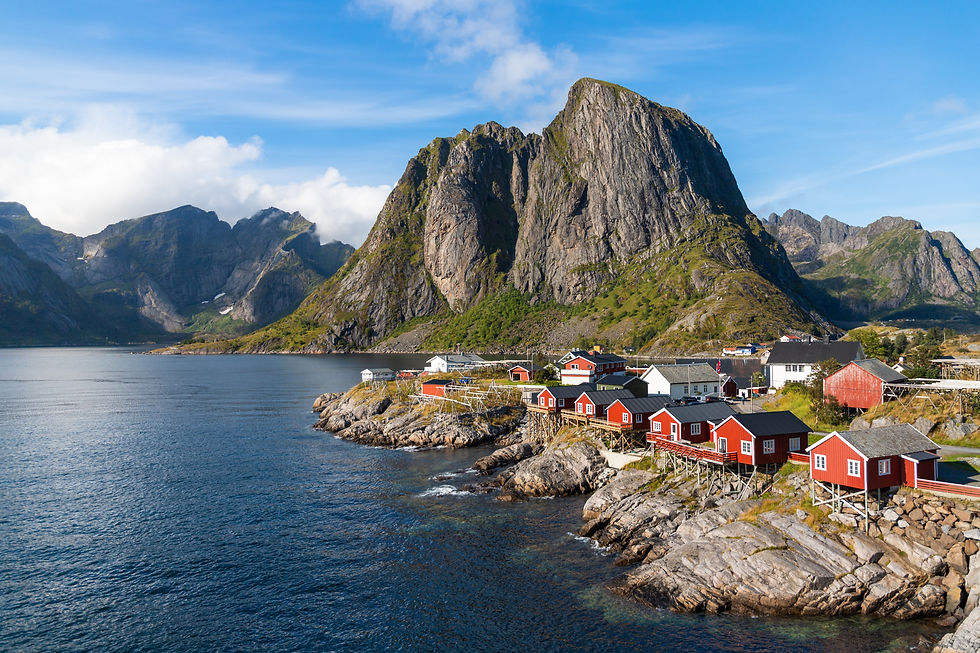
Lofoten: mountains meeting the sea
Lofoten is the best known of the northern island groups, and its reputation is deserved. Steep peaks rise straight from the sea, fishing villages sit on the shoreline with their red cabins, and beaches with turquoise water lie under snowy ridges. In winter the islands are quiet and atmospheric, and in summer they are green and light-filled.
The scale is compact, which means a few days can include a great deal. But travelling there from Tromsø takes time, whether by road, sea or air, and we plan it carefully so that the journey becomes part of the experience. Our guide to getting from Tromsø to Lofoten sets out the options.
Lofoten suits travellers who want the famous scenery and are prepared to give it enough time. We generally recommend at least three nights there, ideally with a private guide to help you avoid the busiest viewpoints and to choose the best light. If you are weighing the islands against other destinations, our post on Senja or Lofoten sets out the differences.
Choosing the season for the islands
Winter in Lofoten has snow, strong light and the possibility of northern lights over the mountains, though the weather can change quickly. Summer has the midnight sun, which in Northern Norway runs from about 20 May to 22 July, with long light for hiking and coastal walks. The shoulder months are quieter and often more settled.
The Lyngen Alps: fjord and peak together
The Lyngen Alps lie about an hour from Tromsø and combine alpine peaks with deep fjords in a way that is unusual even in Norway. The mountains rise steeply from the water and are widely regarded as some of the finest ski-touring terrain in the world, with a season that typically runs through spring.
But you do not need to ski to appreciate Lyngen. The drive along the fjord shore, the ferry crossings, the views of the peaks across the water and the quiet villages are enough for many visitors. In winter, a private vehicle gives you the freedom to stop and photograph, and in summer the region is a base for hiking.
Lyngen suits travellers who want mountains and fjords in a single landscape, and who are happy to spend time on the road. It also works well as a pairing with Tromsø, since it is close enough for a long day trip or a short stay. Our guide to the Lyngen Alps has more detail.
Choosing between them, and combining them
Here is how we usually frame the decision for two people planning a journey.
If you have three to four days, base yourselves in Tromsø and see the western fjords, with perhaps a day in the Lyngen Alps.
If you have five to seven days, add Senja, either as a long day or an overnight stay.
If you have seven days or more, consider adding Lofoten, either by road, sea or air, and treat it as a distinct stage of the journey.
Multi-destination journeys are a speciality for us, but they need care. Moving every night is tiring, and we generally advise staying at least two or three nights in each place. Our post on combining several Arctic destinations without hotel-hopping fatigue goes through how we balance it.
A seven-day example might run three nights in Tromsø, two on Senja and two in Lofoten, with private transfers between them and a free morning at each change of base. The detail depends on season and preference, and the plan is always built around your dates.
Seeing the fjords in comfort
The fjords of Northern Norway are best seen at a human pace, and the way you travel makes a large difference. A private vehicle with a professional driver, which for us means a premium Mercedes, lets you stop where the light is best and rest between stops. A private guide explains what you are seeing, from the history of the villages to the geology of the peaks.
For travellers who like the water, boat trips and private yacht days can be arranged through partners, and they offer a very different perspective from the road. Helicopter tours and transfers are also available through partners, for those who want to see the scale from above.
Dress warmly in winter with a wool base layer, a warm mid-layer, a wind- and waterproof shell, a hat, scarf, mittens and insulated boots. In summer, bring layers and a waterproof jacket, since coastal weather can change quickly. Our guide to Northern Norway month by month will help you choose when to go.
Frequently asked questions
How are the fjords of Northern Norway different from the southern ones?
The northern fjords are generally wilder and more open to the sea, with mountains rising straight from the water and fewer visitors. In winter they are under snow and in summer they have the midnight sun. They are less about waterfalls and more about drama and space.
Which fjords are closest to Tromsø?
The coast west of Tromsø, across the island of Kvaløya towards Sommarøy, is the closest, and can be seen in a half or full day. The Lyngen Alps lie about an hour away and can be visited on a long day or a short stay.
Is Senja or Lofoten better for fjords?
Both are beautiful. Lofoten is better known and has more visitors. Senja is quieter and more concentrated. We help couples choose based on time available, season and how much travelling they want to do.
How many days do we need to see the northern fjords?
You can see a great deal from Tromsø in four days, including the western fjords and perhaps Lyngen. Adding Senja suits five to seven days, and Lofoten is best with seven or more.
Can we see the fjords in winter?
Yes. Winter gives snow, soft light and the chance of northern lights, though daylight is shorter. We plan fjord days around the best light and weather, and a private vehicle gives the flexibility to adjust if conditions change.
Plan your Arctic journey
If you would like help choosing which fjords belong in your journey, tell us when you hope to travel and how long you have, and we will reply within one business day with first ideas.


Comments