
Planning Autumn 2027 in Arctic Norway: Colour, Calm and the First Aurora

September and October 2027 are a good time to plan for now, because the autumn shoulder season has become one of the most requested periods of the year, and the best private experiences are arranged months ahead. It is also the season that rewards travellers who like to see the Arctic twice in one trip: the last of the green and gold on the mountains by day, and the first northern lights of the new season by night.
This article is a planning guide rather than a description of the season. If you want the full picture of what autumn looks like, our guides to Arctic autumn in Northern Norway and autumn northern lights in Tromsø cover it in detail. Here we focus on a different question: how to build a good autumn 2027 journey, when to start, and what to decide first.
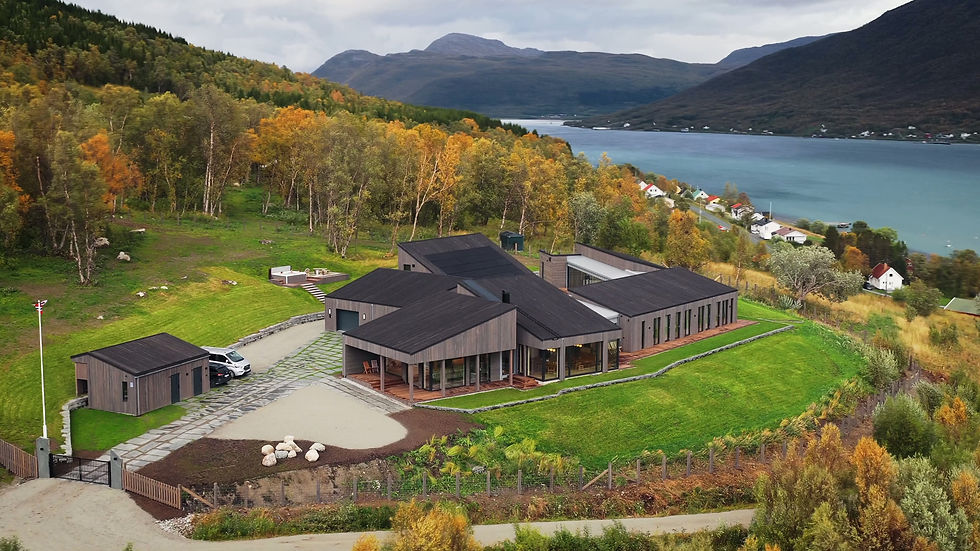
Why autumn works so well for couples
The northern lights season in Tromsø runs from September to early April, and September is where it begins. The nights are dark enough again after the white nights of summer, but the weather is far milder than in midwinter. Many couples tell us they prefer this: the same sky, with fewer layers and more freedom to walk, drive and sit outside. Daylight is generous too. Around the equinox in late September, day and night are roughly equal in length, which gives you a normal day for activities and a real night for the aurora.
Autumn also feels quieter. Roads are calmer, the busiest winter weeks have not begun and the landscape has its own colour: birch and bilberry turning orange, red and gold against the first dusting of snow on the high peaks. For travellers from the United Kingdom, the United States and Australia, it is also a gentler adjustment, since the cold is moderate and the days are familiar in length.
Who autumn suits best
Couples who want the northern lights without deep winter cold.
Photographers who like colour as well as darkness.
Travellers who prefer quieter places and more choice in where to stay.
Anyone combining Tromsø with Senja or Lofoten, where the autumn colours are strongest on the islands.
When to start planning, and what to decide first
We recommend six to twelve months for peak winter, and autumn benefits from the same lead time. For September and October 2027, starting in the first half of 2027 is sensible, and long-haul guests often begin earlier. The reason is simple: the lodges, private drivers and guides that make a journey feel effortless are limited in number, and the best weeks go first. Last-minute enquiries are always welcome, but earlier planning gives you more choice.
When you begin, three decisions matter most, and the rest follows from them.
Dates. Early September has more light and more colour on the lower slopes. Late September and October have darker nights and often stronger northern lights viewing, with colours moving to the high ground.
Number of nights. We recommend at least five nights in Tromsø for northern lights. If you add Senja or Lofoten, a week to ten days feels comfortable.
Base. Decide whether you want a city stay, a wilderness cabin or lodge, or a split between the two. Our guide to combining city and wilderness stays explains the logic.
A sample shape for a seven-day autumn journey
This is the outline we would start with for a couple, adjusted to weather and preferences. It is not a package, and every journey is tailor-made.
Days one and two: Tromsø
Arrival, a private transfer and a gentle first day in the city. The second day is usually a guided walk on bare autumn trails, with a local who can explain the landscape, and a first aurora evening close to town. The viewpoint above the city shows the island, the bridge and the mountains in autumn light.
Days three and four: the coast
A private fjord day to Sommarøy and Kvaløya takes five to six hours, with stops at fjord villages such as Kaldfjord and Tromvik and the white beaches of Sommarøy. In autumn the water is often calm and the colours on the hills are at their best. You can read more in our guide to the private Sommarøy and Kvaløya fjord day. We usually leave the evening free for dinner and a possible aurora attempt.
Days five to seven: choose your second landscape
The final days are where autumn journeys become distinctive. Senja, a long scenic drive from Tromsø that works best with an overnight stay, offers jagged peaks and fjord mirrors in autumn colour. Lofoten brings red cabins, steep mountains and long beaches. Alternatively, stay near Tromsø and add a Sámi experience, a sea-eagle outing or a private northern lights chase. Our articles on Senja in autumn colours and Lofoten in autumn help you choose.

Weather, clothing and honest trade-offs
Autumn weather in Northern Norway is changeable. A clear morning can turn to rain by afternoon, and the sea breeze can feel colder than the thermometer suggests. Temperatures are typically milder than in winter, though they can still fall close to freezing at night, particularly in October. The practical answer is layers: a wool base layer, a warm mid-layer, a waterproof shell, a hat and gloves, and sturdy boots. Our guides can adjust the route when the weather changes, and this flexibility is one of the main reasons to travel privately.
There are trade-offs worth knowing. In early September the nights can still be fairly bright, so the first northern lights are fainter than in deep winter. In late October there is a greater chance of snow on the roads, which affects longer drives. Northern lights are never guaranteed in any month, and cloud can obscure them for several nights in a row. We spread aurora evenings across the week and, where possible, add a night outside the city so you have more than one location to try.
Book this if / skip this if
Book this if you want both colour and darkness, and you value quiet over spectacle.
Skip this if your heart is set on deep snow, the polar night and ski days. That is a winter journey, and February or March suits it better.
Our guide to summer or winter in Arctic Norway also helps when you are deciding between seasons.
What autumn adds: light, wildlife and food
Autumn has its own character, and a few details are worth building into the plan. The light is low and golden for much of the day, which makes landscapes look deeper and gives photographers longer working hours than in midsummer or midwinter. Along the coast, sea eagles are often easier to spot as the weather turns, and reindeer move down from the high ground. On the hills, berries and the first coloured leaves give a walk more texture than it has at any other time of year.
Food follows the season too. Menus lean towards the sea and the mountains: fish and shellfish, reindeer and berries, with root vegetables and herbs from the north. We do not name restaurants in our articles, because the right table depends on the night, but culinary journeys with local ingredients and fine wines are part of what we arrange, and autumn is a lovely time for them. Dinners feel warm without being heavy, and the long evenings invite a slower table.
Small choices that make autumn better
Allow one unscheduled afternoon. The weather often decides which day is best for a long drive.
Keep one evening free of dinner reservations, so you can leave quickly if the sky clears.
Consider a night outside the city. Dark skies from the door change the way the aurora feels.
These details are the difference between a good journey and one that feels effortless. A private driver-guide handles them without fuss, and the plan can shift when the weather does.
How we arrange an autumn journey
Every journey starts with a short conversation about who is travelling, when you are free and what you would like to feel. We ask for a budget idea, because journeys are priced as one complete experience and the budget shapes where you stay and how private each day is. You receive a proposal, and once you confirm, a personal digital dashboard holds your itinerary, bookings, tickets and documents. Our team supports you before and during the trip. Details of how it works are in our FAQ.
Frequently asked questions
When do the northern lights season and autumn colours overlap?
The season begins in September, and the autumn colours are typically at their best from mid-September into early October, though this varies with the year and the altitude. Late September is often a good compromise, with darker nights and colour still on the hills.
How early should we book for September or October 2027?
We recommend six to twelve months ahead, and for autumn, starting in the first half of 2027 gives you a good choice of stays and guides. Late enquiries are welcome, subject to availability.
Is autumn warmer than winter in Tromsø?
Yes, usually considerably. Temperatures are typically mild by Arctic standards, though evenings can be cold and wet. Pack layers and waterproofs rather than heavy winter gear, and let us advise on specifics closer to your dates.
Can we combine Tromsø with Senja or Lofoten in autumn?
Yes. Multi-destination journeys are a speciality, and autumn colours are especially striking on the islands. We usually suggest at least a week for two destinations, with a private driver so you are not hurried between stays.
Plan your Arctic journey
If autumn 2027 appeals, tell us your preferred weeks and the landscapes you are drawn to, and we will shape a journey around them. We reply within one business day with first ideas.


Comments