
Lofoten in Autumn: September and October, Done Privately

Lofoten has a reputation for summer light and winter drama, which leaves autumn quietly overlooked. That is a mistake. In September and October the islands change character: the hillsides turn rust and gold, the air clears, the sea turns a harder, darker blue, and for the first time since spring there is real night. It is also a season when the roads are calmer and a journey can feel more private.
Autumn is not without compromises. Daylight shortens quickly, weather can turn, and some summer experiences are no longer available. But for couples and small groups who like atmosphere over spectacle, it can be the most rewarding time to visit, particularly when combined with a few nights in Tromsø.
What follows is a planner's view of Lofoten in September and October: what to expect, what to do, how to move, where to stay, and when this season is the wrong choice.
What autumn looks like on the islands
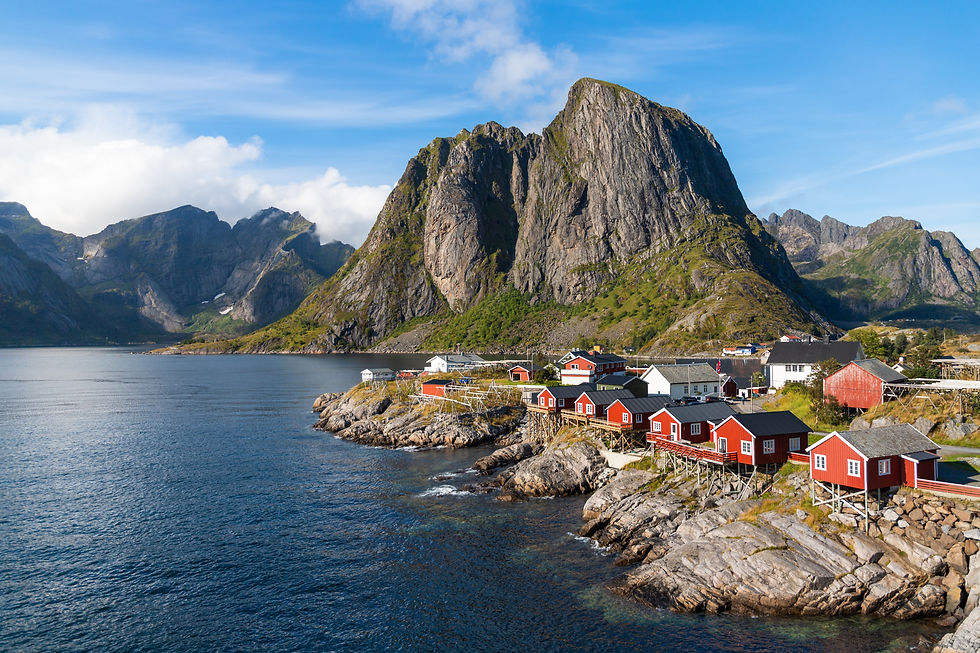
In September, the first colours arrive on the lower slopes, and by early October the hillsides are at their richest, with the red rorbu cabins of the fishing villages standing out against the mountains. The light is lower and warmer than in summer, and the long golden hours around morning and evening make the landscape look painted. Reine, with its red cabins beneath steep peaks, is the classic image, and it works particularly well in soft autumn light.
The weather is changeable. Expect a mixture of bright, still days and wet, windy ones, sometimes within a few hours. Temperatures are cooler than in summer but generally milder than deep winter, and snow usually stays on the high peaks first. It is wise to plan for rain and wind, and to treat any single day's forecast as provisional. Our article on flexible itineraries when the weather turns explains how we build in margin.
Daylight shrinks fast. By late September the days are noticeably shorter, and by October there is a clear evening and night, which brings the stars back, and the possibility of the northern lights. The aurora season in the region begins in September, so a clear October night may deliver a first display. As always, this is never guaranteed.
Compared with summer, there are fewer visitors, and villages feel calmer. For travellers who value space and quiet, that is the main attraction.
What to do in Lofoten in autumn
Scenic drives and coastal stops
Lofoten's roads and bridges link islands and villages in a way that makes a private drive an experience in itself. With a driver-guide, you can stop at viewpoints, beaches and fishing villages without worrying about parking or the road. Autumn light suits photography, and the lack of crowds makes it easy to linger.
Hikes at a sensible length
The islands are known for steep, rewarding hikes. In autumn, conditions on the trails can be wet and slippery, and daylight is limited, so we choose routes carefully and favour shorter, well-chosen walks with a guide over ambitious summit attempts. A short walk to a beach or a ridge, with a flask and a rest, is often better than a long push to a peak in fading light.
Sea and coast
Boat experiences along the coast can show off the mountains from the water, and the autumn sea is dramatic. Availability depends on weather, so we plan these flexibly. In the northern region the whale season begins in November, so it is not part of a September or October plan around Lofoten, and we would not suggest otherwise.
Food and long evenings
As the evenings darken, the food becomes a larger part of the experience. A culinary journey built on local ingredients and good wine is a natural fit for autumn: long dinners, warm rooms, and the sound of weather outside. It suits couples especially well.
E-bike days
Legendary Adventure runs a seven-day Arctic Coast e-bike journey in Lofoten, which suits active travellers. Early autumn, with fewer cars and soft light, can suit riding along the coast, though we confirm dates and conditions for each season before planning around it. Read our guide to the Arctic coast e-bike week for the detail.
September or October: which is better?
The two months feel different, and the right choice depends on what you want from the trip.
September is the gentler month. Days are longer, temperatures are milder, the first autumn colours appear, and outdoor experiences are more reliable. It is the better choice if you want hiking, e-biking and long days outside, and if you prefer a gradual transition from summer. The aurora season has just opened, so it is possible to see the lights on a clear night, but the sky is not yet as dark for as long.
October is moodier. Colours peak early in the month, then fade as the leaves fall. Nights are properly dark, the sky is better for the northern lights, and the atmosphere is quieter and more introspective. Weather is more variable, and some seasonal operators wind down, so the plan needs more flexibility. It suits travellers who like drama and solitude, and who are comfortable with a fluid schedule.
If you cannot decide, consider late September to early October, which often combines the best of both. Our guide to Arctic autumn in Northern Norway compares the two months across the region.
How to combine Lofoten with Tromsø
Lofoten works best as part of a longer journey, and Tromsø is the natural partner. A common structure is three or four nights in Tromsø for the city, the fjords and a flexible aurora window, followed by three or four nights in Lofoten for the islands and the coast. Tromsø gives you reliable infrastructure, and Lofoten gives you the landscape.
Getting between the two takes time. Options include road, sea and air, and each has trade-offs in time, comfort and scenery; our guide to getting from Tromsø to Lofoten sets them out. In autumn, when weather can disrupt a plan, we favour arrangements with some margin, and we avoid tight connections on the day of a flight home.
If time is limited, it may be better to choose one place. Many first-time visitors try to see everything, and end up with a rushed week. A slower pace, with a longer stay in each base, makes the journey feel better. Our article on choosing between Tromsø and Lofoten will help you decide.
Where to stay and how to travel
Accommodation on the islands ranges from luxury Arctic lodges and exclusive private apartments to secluded wilderness cabins, and we choose by location and by the kind of week you want. In autumn, a stay with a view, a warm living room and a window onto the evening sky is worth prioritising, since you will spend more time indoors than in summer.
Transport is private. A professional driver in a premium vehicle handles the roads, the weather and the timing, and your guide decides where to stop. This matters more in autumn than in high summer, because conditions can change, and a local driver knows how to adapt. See why the vehicle matters for more on how we travel.
Clothing should be layered and waterproof. A wool base layer, a warm mid-layer, a wind- and waterproof shell, hat, mittens and sturdy boots will cover most conditions. Cotton next to the skin is best avoided.
A sample autumn week
To make this concrete, here is the outline of a seven-night autumn journey for a couple, built around a loose rhythm that can flex with the weather:
Nights 1 to 3, Tromsø: a gentle arrival, a drive along the coast to Kvaløya and Sommarøy, and one private northern-lights evening if the sky allows, with a second attempt held in reserve.
Day 4, transfer: a relaxed move to Lofoten, timed to leave a margin for weather, with a long lunch and no scheduled activity on arrival.
Nights 4 to 6, Lofoten: a private day of coastal drives and fishing villages, a shorter guided walk chosen on the morning, and a long dinner in a warm room. A free day sits in the middle.
Night 7 and departure: a slow last morning, with the return journey planned with generous time before any flight.
The week contains one big move and a deliberate gap in the middle, which is the key to enjoying autumn: the plan protects you from the weather, instead of fighting it.
When autumn is the wrong choice
We are honest about the limits. If you want the midnight sun, summer is the season. If you want deep snow, dog sledding and a classic winter landscape, come between December and March. If you want warm, settled weather for long days outdoors, early summer is safer.
Autumn also asks for flexibility. A day of rain can reshape the plan, and a couple who need every day to be exactly as written will be happier in a different season. For those who enjoy atmosphere and are comfortable with a loose schedule, autumn is an under-appreciated pleasure. Our piece on shoulder season in Northern Norway explains the broader trade-offs.
Frequently asked questions
Can you see the northern lights in Lofoten in September and October?
Yes, the aurora season begins in September, and clear, dark October nights can produce displays. As everywhere, sightings are never guaranteed, because they depend on solar activity and cloud.
Is Lofoten too wet in autumn?
The weather is changeable, with a mix of bright and wet days. Good waterproof clothing and a flexible plan make it manageable, and the dramatic light after a shower is part of the appeal.
How many nights should I spend in Lofoten?
Three or four nights is a sensible minimum, so the journey does not feel rushed. Many guests combine that with several nights in Tromsø for a balanced week or more.
Are the autumn colours reliable?
Colours usually peak around late September to early October, but timing varies with the weather each year. We plan the trip around likely conditions and avoid promising a particular week.
Is autumn quieter than summer?
Generally yes. Villages and roads are calmer, which suits travellers who want space and a private feel to the journey.
Plan your Arctic journey
If Lofoten in autumn appeals, tell us when you would like to travel and how long you can stay, and we will reply within one business day with first ideas for a private journey.


Comments