
Northern Lights in Lofoten: Dark Skies, Red Cabins and Private Evenings

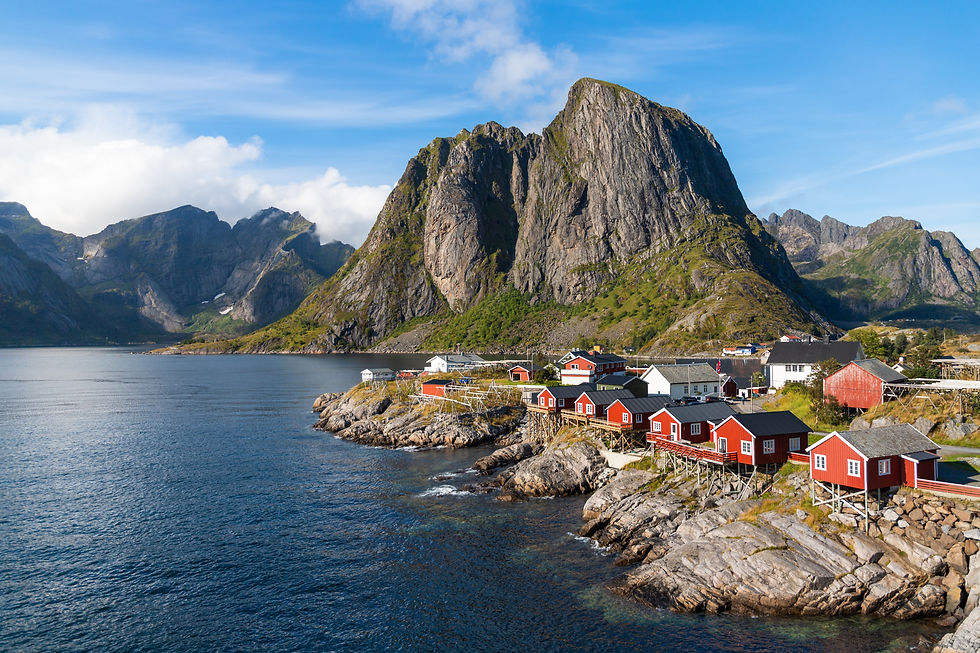
Lofoten is one of the best places in Europe to watch the northern lights, and one of the more demanding. The islands sit well inside the auroral zone, the skies away from the villages are properly dark, and the foreground is hard to beat: red fishing cabins, sea stacks, white beaches and mountains that rise straight out of the water. What Lofoten does not offer is the cloud-escape flexibility that Tromsø has, so the way you plan the stay matters more than the forecast on any single night.
This guide explains what makes the aurora in Lofoten different, which months and nights tend to work best, how a private evening is organised, and how we combine Lofoten with Tromsø so that the two places support each other. As ever, the northern lights are never guaranteed. What we can do is give you more nights, better positions and a warm place to wait.
If you are still deciding between bases, our comparison of Tromsø or Lofoten is a good companion to this one.
What makes Lofoten different for the aurora
Lofoten lies on the Atlantic side of Northern Norway, a chain of steep islands stretching south-west from the mainland. The latitude is high enough that, in a good season, auroral activity is visible on many clear nights between September and early April. That part is the same as Tromsø. The differences are in the landscape and the weather.
The first difference is darkness. Outside Svolvær and a handful of larger villages, there is very little artificial light, and the mountains themselves block much of what there is. A faint arc on the horizon that would be lost in a town reads clearly from a quiet beach. The second difference is the picture. In Lofoten the aurora can sit above something: a row of cabins on stilts, a still bay, a peak with fresh snow. For photographers and for anyone who simply wants the scene to feel like a place rather than a sky, this is the main reason to come.
The third difference is the maritime climate. The Gulf Stream keeps the islands milder than most places at this latitude, but it also brings changeable weather: passing showers, low cloud and wind. Clear spells are frequent, yet they can be short. Because the islands are narrow, a guide can often move a short distance to the other side of a ridge or into a different fjord and find a gap, but there is no equivalent of driving for two hours inland. We plan around that by giving each journey enough nights, usually four or more in Lofoten alone, and by choosing bases that put several different viewing areas within a short drive.
The aurora and the polar night
The polar night itself does not reach Lofoten in the way it does Tromsø, since the islands are further south, so the winter days keep a few hours of daylight. In practice this means more usable light for photography and sightseeing in the day, and still plenty of darkness for the evening. It is a gentler rhythm than the deep midwinter in Tromsø, and many couples prefer it.
When to go: the months, one by one
The season runs from September to early April, and each part of it gives Lofoten a different character. Aurora strength follows the same solar cycle everywhere in the region, so the choice between months is mostly about light, weather and what else you want to do.
September and October. Autumn colour on the hillsides, mild temperatures, and the first dark evenings. The sea is often calmer than in midwinter, and reflections of the aurora in bays are at their best. Roads are free of snow, which makes the whole archipelago easy to explore.
November to January. Short days, soft blue light at midday, snow on the peaks and on the roofs. The nights are long, giving you the widest window for viewing. Storms are more frequent, so we build in extra nights.
February and March. Our favourite stretch for many couples: longer days for hiking, skiing or sea-eagle trips, snow-covered mountains, and nights that are still long enough for the aurora. Temperatures are cold but stable more often than not.
Early April. The end of the season. Evenings stay light for longer, so the aurora window shifts later, and conditions can be bright and clear.
If you can choose, we would suggest late September or October for photographers who want reflections and a quieter archipelago, and February or March for those who want snow, daylight activities and the aurora in the same week. For a broader view of the winter months, see our guide to Lofoten in winter.
How a private northern-lights evening works in Lofoten
Most of our guests in Lofoten spend the evening with a private guide and driver, in a comfortable vehicle, rather than joining a group. The reason is practical. The islands are long and the weather can differ between the north and south coasts, so the ability to decide at short notice where to go, and to leave when the sky changes, is worth more here than almost anywhere else.
A typical evening
The evening begins after dinner, usually between 19:00 and 21:00, depending on the month. Your guide will already have checked the cloud and aurora forecasts through the afternoon and will suggest a first viewing position: a beach, a headland, or a quiet bay with a good view to the north. Hot drinks and something small to eat are brought along, along with warm outer layers if you need them. If the sky is clear and the activity is promising, you stay. If not, the guide proposes another position, sometimes a drive of twenty or thirty minutes, rather than leaving you waiting in the cold.
Good guides also help with photography, if you want it. Setting up a camera or phone for the aurora is a matter of a few simple steps, and a private evening means the guide can spend the time to help you get it right instead of rushing through a group. The images are yours; the guide can also take photographs of the two of you.
Evenings usually finish between 23:00 and 01:00, though if the aurora is strong, nobody is in a hurry. We recommend planning the following morning with a late start.
Book this if, skip this if
Book a private evening if you want the freedom to move with the weather, to stay as long as the sky deserves, or to share the night with only the person you are travelling with.
Consider something simpler if you would rather stay close to your lodge and step outside when the sky clears. Many of the places we use for Lofoten stays have a dark outlook, and a quiet evening in a warm room with a window is also a good plan.
Where to stay for dark skies and warm nights
The base you choose in Lofoten shapes the aurora experience as much as the guide does. We work with a small number of luxury lodges, private apartments and secluded cabins, selected for comfort and for their position away from the brightest lights. We do not publish property names here; they depend on dates, group size and the style of the journey, and we recommend them once we know what you are looking for.
What we look for in a base is straightforward. A view to the north or north-west is ideal. A location outside the larger villages reduces light pollution. A terrace, a hot tub or a large window makes it possible to watch the sky without dressing for an expedition. And a short, easy drive to two or three different viewing areas gives us options when cloud sits over one side of the islands.
For couples, a cabin by the water with a wood stove and a clear view can be the whole point of the stay. For families and small groups, a lodge with several rooms and a shared living space tends to work better. A common pattern is to spend two nights in one place and two in another, to see more of the archipelago and to vary the viewing positions.
Combining Lofoten with Tromsø
Few of our guests visit Lofoten alone. The strongest itineraries pair it with Tromsø, because the two places complement each other. Tromsø gives you the broader weather options and a wider choice of experiences: dog sledding, snowmobiling, a Sámi experience, whale watching in season, and the city itself. Lofoten gives you the dramatic backdrop and the quiet.
The question is the order. For a stay of seven to ten days, we often suggest Tromsø first, which allows you to settle in, see how the aurora behaves in a place with flexible weather, and have a spare evening or two in reserve. You then travel to Lofoten for the scenery, and with the knowledge that you have already had a chance at the sky. Others prefer to do it the other way round, ending with the islands for a slower finish. We will talk through the trade-offs when we design the journey, including how to travel from Tromsø to Lofoten.
For a first impression of how the aurora works around Tromsø, our piece on how a northern-lights night works sets out the fundamentals.

Practical points before you go
Dress for stillness rather than for walking. Standing at a viewing position at night is colder than being active, so bring a wool base layer, a warm mid-layer, a wind and waterproof shell, a hat, scarf, mittens and insulated boots. Avoid cotton next to the skin. Some experiences provide thermal suits on cold days, and your dashboard will say what is included.
Keep your plans loose on the day after a late aurora night. Sleeping in and taking a gentle afternoon is better than an early start. If you want to photograph the aurora, practise with your camera before you travel, and bring spare batteries, since cold drains them quickly.
Finally, build in margin. The more nights you allow, the more likely it is that at least one will give you a good sky. We recommend at least four nights in Lofoten and, across the whole journey, a minimum of five nights in the region. Weather is weather, and no itinerary can promise a particular sky, but a longer stay shifts the odds in your favour.
Frequently asked questions
Can you see the northern lights in Lofoten?
Yes. Lofoten lies within the auroral zone, and the aurora is visible on clear nights between September and early April. Dark skies outside the villages help, though the weather is changeable, so we recommend several nights. The lights are never guaranteed, and we plan with that in mind.
Is Lofoten better than Tromsø for the northern lights?
Neither is simply better. Lofoten offers darker skies and a more dramatic setting, while Tromsø has more flexibility when the weather is poor and a wider range of other experiences. Many of our journeys combine the two for the best of both.
How many nights do we need in Lofoten?
We suggest at least four nights in Lofoten, and a minimum of five nights across a journey that includes Tromsø. More nights mean more chances of a clear sky, and they also let you enjoy the islands at an unhurried pace.
What is the best month to see the aurora in Lofoten?
There is no single best month. September and October offer mild weather and reflections, while February and March combine snow, daylight activities and long nights. December and January have the longest nights but more storms. We help you choose according to what else you want from the trip.
Can a private guide take us to a different place if it is cloudy?
Often, yes. Because the islands are narrow, a guide can usually reach a different bay or coast within thirty minutes or so, and find a clearer patch. We cannot promise a clear sky, but being able to move quickly is the main advantage of a private evening.
Plan your Arctic journey
A northern-lights journey that includes Lofoten works best when the nights, the bases and the order of destinations are chosen together. Tell us when you would like to travel and what matters most, and we reply within one business day with first ideas.

Comments