
Where to Stay in Lofoten for Comfort: A Planner’s Guide

For comfort in Lofoten, choose where you sleep by the kind of days you want: a traditional fishing cabin on the water for atmosphere, a private apartment in a harbour town for convenience, or a secluded cabin for silence. The islands reward a base that matches your rhythm far more than a long list of options, and the best choice changes with the season and with how many nights you have.
We plan journeys in Lofoten as part of a wider Northern Norway route, often after a few nights in Tromsø, so we think about accommodation as one element of a story rather than a standalone booking. Below is how we weigh comfort in the islands: what the different styles of stay offer, what to ask before you commit, and how winter and summer change the answer. We do not name properties here, because the right one depends on your dates and group, and availability moves quickly.
What comfort means in Lofoten
Lofoten is a long chain of islands, and distances that look small on a map take time on a narrow coastal road. Comfort here is therefore partly about location. A room with a view of the fjord matters, but so does being ten minutes rather than an hour from the harbour where your boat or guide meets you in the morning.
The second part of comfort is warmth and light. In winter you will come in from the cold several times a day, so a good drying space for boots and shells, heating you can control, and blackout curtains for the long summer evenings are not luxuries. They are what makes a week enjoyable rather than merely scenic.
The third part is service. Many of the most atmospheric stays are small, owner-run and quiet. That is their charm, but it means breakfast times, dinner arrangements and check-in windows need coordinating. Part of our work is taking those details off your hands, so the practicalities are settled before you arrive and a person in Tromsø is available if anything changes on the way.
The main styles of stay
Fishing cabins on the water
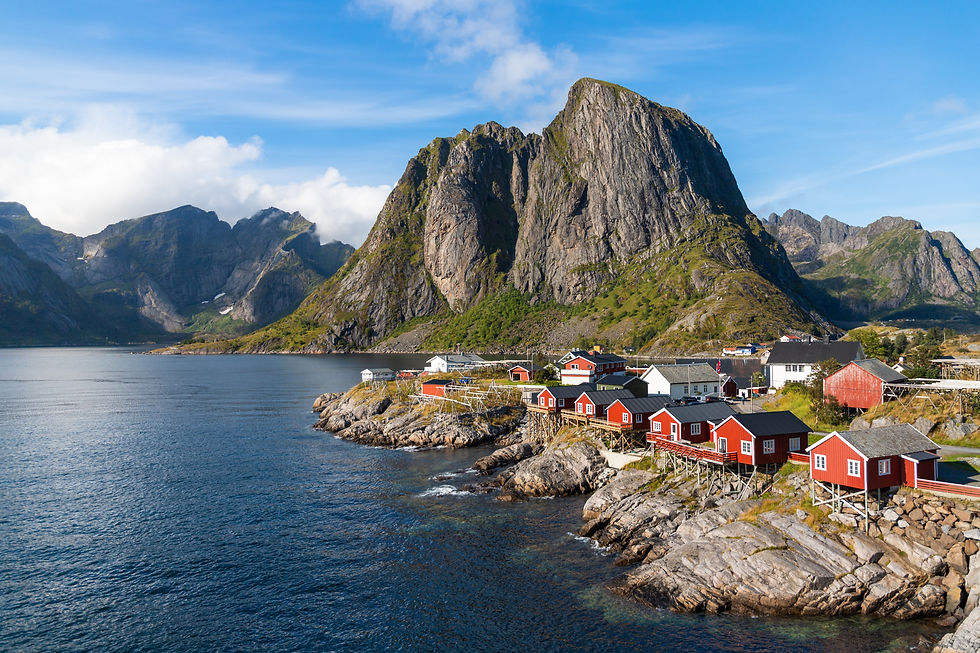
The red rorbu cabin is the image most people have of Lofoten. Originally built for fishermen who came for the winter cod season, many have been converted into comfortable accommodation with proper kitchens, bathrooms and views over the harbour. The best of them combine character with modern heating and insulation. They suit couples and small families who like a sense of place and do not need hotel-style services at the door.
Private apartments in the harbour towns
A private apartment in a town such as Svolvær puts restaurants, a harbour and shops within walking distance, and it is often the easiest base for a short stay. We use exclusive private apartments in our portfolio for guests who value space, a kitchen for slow mornings and the freedom to come and go. It is the practical choice for groups travelling together and for anyone arriving by a late flight or coastal connection.
Secluded cabins and lodges
For silence, nothing beats a secluded wilderness cabin or a lodge set away from the main road. Here the landscape is the entertainment. You trade walkability for stars, stillness and, in the right season, a chance of northern lights from the doorstep. These stays work best when a driver or guide handles the longer transfers and when you plan meals in advance, since you may be some distance from the nearest restaurant.
Where to base yourself
Lofoten does not have a single centre. We usually think in terms of a northern, central and southern base, and choose one or two depending on the length of the journey.
A northern base around the larger harbour town gives the easiest access to transport links, dining and boat departures. It is the sensible choice for a three- or four-night stay and for travellers who want comfort and convenience over remoteness.
A central or southern base brings you closer to the postcard villages, the steepest mountains and the quieter beaches. It adds driving time to anything in the north, so we pair it with a private driver and keep the daily programme light. For a week or longer, we like to split the stay: two or three nights in one area, then a move to another, so that you see the islands change without feeling that you spend the holiday in a car.
Book this if you want the character of a traditional harbour and are happy with a simple, well-kept cabin.
Choose a town apartment if you value walkable dining, space for a group and easy logistics.
Skip a remote cabin if you would rather not plan meals ahead or rely on a driver for every outing.

Winter and summer change the answer
In winter, daylight is short and the weather can change quickly, so we favour a base that is comfortable to return to by early afternoon, with a view and a warm place to rest. Polar night in the far north is brief or absent further south in the islands, but the light is still low and soft. Evenings are for dinner, a quiet drink and, if the sky allows, stepping outside to look up. Northern lights are never guaranteed, so the stay itself should be worth the journey without them. You can read more about the season in our guide to Lofoten in winter.
In summer the logic reverses. Under the midnight sun, the question is less about warmth and more about sleep, sun-facing terraces and access to the water. Blackout curtains, a room that stays cool and a position near hiking trails or the harbour all matter. Our notes on Lofoten in summer describe what the long days make possible, from boat trips to ridge walks at any hour.
Shoulder months, autumn and spring, can be the most rewarding for comfort-minded travellers. There are fewer people, the light is beautiful, and it is easier to secure a good location. We would simply plan extra flexibility into the schedule for weather.
Questions we ask before we recommend a stay
Before we suggest a base, we work through a short list with you. It keeps the proposal honest and avoids surprises on arrival.
How many nights do you have in Lofoten, and are you arriving from Tromsø or elsewhere?
Do you want to walk to dinner, or would you rather have silence and a private driver?
Is anyone in the group sensitive to stairs, steep paths or uneven ground?
Which season are you travelling in, and how important is a chance of aurora or midnight sun from the window?
Do you want a kitchen, or is a prepared breakfast and dinner arrangement more relaxing?
Are you combining Lofoten with other destinations, so that we can minimise moves?
Answers to those six questions usually narrow a wide field to two or three sensible options. We then present the proposal as one complete experience, with the accommodation sitting naturally alongside transfers, guides and meals.
Getting there and moving between stays
Most guests combine Lofoten with Tromsø. Depending on your timing, the connection can be by road, by a coastal route or by air, and each has trade-offs in time, scenery and reliability. We cover the options in detail in how to travel from Tromsø to Lofoten, and you can compare the two destinations in Tromsø or Lofoten: which base suits your journey.
Whichever route you choose, we recommend allowing a buffer on the day you transfer. Winter weather can slow roads and delay flights, and nobody should be rushing to make a dinner reservation after a long drive. Our own premium Mercedes fleet with professional drivers is part of how we keep these days calm, and we coordinate bags, check-in and the pace of the day so that you arrive rested.
If you want to see how Lofoten fits into a wider route, the Lofoten page is a good starting point, and our article on luxury lodges in Northern Norway describes the lodge style of stay in more depth.
Frequently asked questions
Is a traditional fishing cabin comfortable enough for a luxury trip?
Many have been renovated to a high standard, with modern heating, bathrooms and views over the harbour. They offer character rather than hotel-style service. We tell you honestly what each option offers, so you can decide whether the atmosphere is worth the trade-off for your dates.
How many nights should we spend in Lofoten?
We usually suggest at least three or four nights so that travel days do not dominate, and five or more if you want to see more than one part of the islands. A short stay works well from a base with easy access to dining and boat departures.
Can we see the northern lights from our accommodation?
It is sometimes possible, especially from a secluded cabin or lodge away from town lights, between September and early April. Northern lights are never guaranteed, so we plan the stay to be rewarding in its own right and add guided evenings if you would like more chances.
Do you name the properties you use?
We share specific recommendations in your personal proposal, once we know your dates, group and preferences. Availability changes quickly and the right choice depends on your plans, so we do not publish a fixed list.
Is Lofoten suitable for travellers with limited mobility?
Some stays and viewpoints are easier than others. Tell us about any needs when you enquire, and we will plan accommodation, transfers and activities around them. Our article on accessible Arctic journeys goes into more detail.
Plan your Arctic journey
A good stay in Lofoten starts with an honest conversation about how you like to travel. Tell us when you would like to travel and who is coming, and we reply within one business day with first ideas.


Comments